

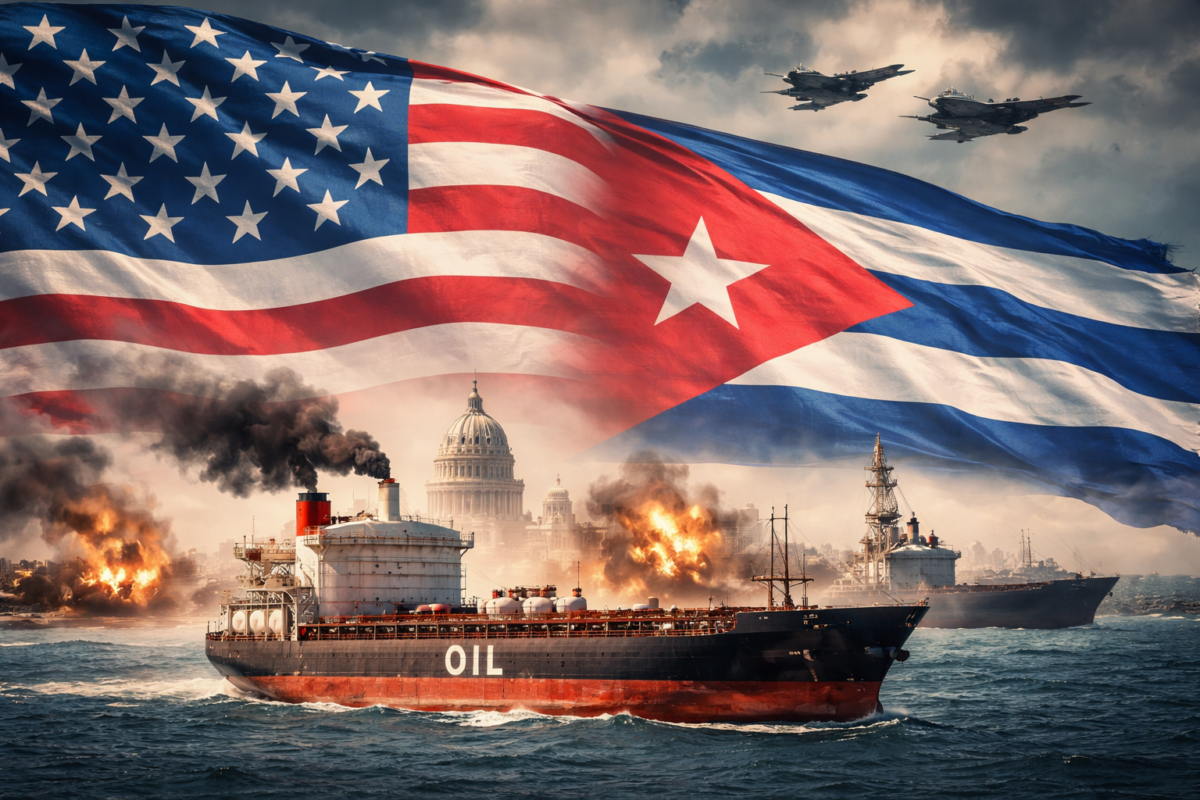
US–Cuba Oil Blockade Escalation: Rising Tensions and War Fears – US sanctions targeting Cuba’s oil supply are intensifying economic pressure, raising fears of regional instability and a potential conflict in the Caribbean. Relations between the United States and Cuba have entered a dangerous new phase as economic pressure intensifies around Cuba’s access to oil. Recent policy moves by Washington signal a dramatic escalation, raising fears of economic collapse, regional instability, and even military confrontation. The situation marks one of the most serious challenges to U.S.–Cuba relations in decades, with implications extending far beyond the island nation.
US–Cuba – The Oil Blockade Strategy Explained
In January 2026, the United States announced a sweeping policy aimed at cutting off Cuba’s primary energy supplies. By declaring a national emergency, U.S. authorities introduced a mechanism allowing tariffs and trade penalties against countries that export oil to Cuba. This strategy goes beyond traditional sanctions, extending pressure to third-party nations that maintain commercial ties with Havana.
The objective is clear: to isolate Cuba economically by targeting its most vulnerable sector—energy. Oil is critical for electricity generation, transportation, food distribution, and industrial production. By threatening penalties against foreign suppliers, the U.S. effectively discourages global partners from engaging with Cuba’s energy market, increasing the country’s isolation.
Table of Contents
Cuba’s Energy Dependence and Economic Fragility
Cuba’s economy is heavily dependent on imported oil, making it highly susceptible to external shocks. Domestic production covers only a small fraction of national demand, forcing reliance on foreign suppliers for daily operations. Any disruption in oil imports quickly leads to power shortages, reduced industrial output, and public hardship.
Recent interruptions in shipments from key suppliers have already placed enormous strain on the country. Reports indicate that fuel reserves have fallen to critically low levels, sufficient for only a few weeks of consumption. As a result, rolling blackouts have become more frequent, public transportation has slowed, and manufacturing output has dropped sharply.
The energy crisis compounds existing economic challenges. Tourism revenues have struggled to recover, inflation has surged, and shortages of basic goods have intensified. Without stable energy supplies, Cuba’s ability to stabilize its economy and maintain social services becomes increasingly uncertain.
US–Cuba – Regional and Diplomatic Consequences
The oil blockade does not affect Cuba alone. Countries that have historically maintained trade relationships with Havana are now forced into difficult decisions. Continuing oil exports could trigger economic retaliation, while halting shipments risks damaging diplomatic ties and humanitarian conditions on the island.
This pressure has created a ripple effect across Latin America and beyond. Governments are weighing economic interests against geopolitical risks, reshaping regional alliances in the process. The policy also raises concerns about the use of economic tools as instruments of political coercion, a practice that could redefine future international trade dynamics.
Political Tensions and Heightened Rhetoric
Political rhetoric on both sides has grown increasingly confrontational. U.S. officials justify the measures as necessary for national security and regional stability, while Cuban leadership condemns them as acts of economic aggression. The language used by both governments has fueled speculation about possible escalation.
Cuba has vowed to resist external pressure and preserve its sovereignty, but its limited resources reduce its room for maneuver. With fewer diplomatic allies willing or able to challenge U.S. economic power, Havana faces a narrowing set of options. This imbalance increases the risk of miscalculation, especially during periods of domestic stress.
US–Cuba – Historical Roots of the Conflict
The current crisis is deeply rooted in a long history of strained relations. Economic restrictions have shaped U.S.–Cuba interactions for more than half a century, punctuated by brief periods of engagement and renewed hostility. While past measures focused primarily on bilateral trade, the latest actions represent a broader, more aggressive approach that leverages global economic systems.
Read Also – Naomi Osaka Withdraws from Australian Open Due to Injury
This evolution reflects a shift in how geopolitical influence is exercised in the modern world. Rather than direct military confrontation, economic pressure has become a primary tool for achieving strategic objectives.
Is Armed Conflict a Real Possibility?
While a full-scale military conflict remains unlikely in the immediate future, the risk of escalation cannot be ignored. Severe economic pressure can destabilize governments, provoke internal unrest, and lead to unpredictable responses. In such an environment, even minor incidents can spiral into larger confrontations.
The situation is further complicated by the involvement of third-party nations and regional security concerns. Any misstep could have consequences far beyond Cuba, affecting trade routes, diplomatic relations, and regional stability throughout the Caribbean and Latin America.
Conclusion: A Critical Moment for the Region
The unfolding oil blockade marks a turning point in U.S.–Cuba relations. With Cuba facing a deepening energy crisis and mounting economic pressure, the coming months will be decisive. Whether diplomacy prevails or tensions continue to escalate will shape not only Cuba’s future but also the balance of power and cooperation across the Western Hemisphere.
For now, the world watches as two long-standing rivals navigate a moment that could redefine their relationship—and potentially alter the geopolitical landscape of the region.
Why is the United States targeting Cuba’s oil supply?
The United States is targeting Cuba’s oil supply to exert economic and political pressure on the Cuban government. Oil is essential for electricity, transportation, and industrial activity, making it a strategic leverage point.






[…] Read Also – US–Cuba Oil Blockade Escalation Fuels Regional Tensions […]