

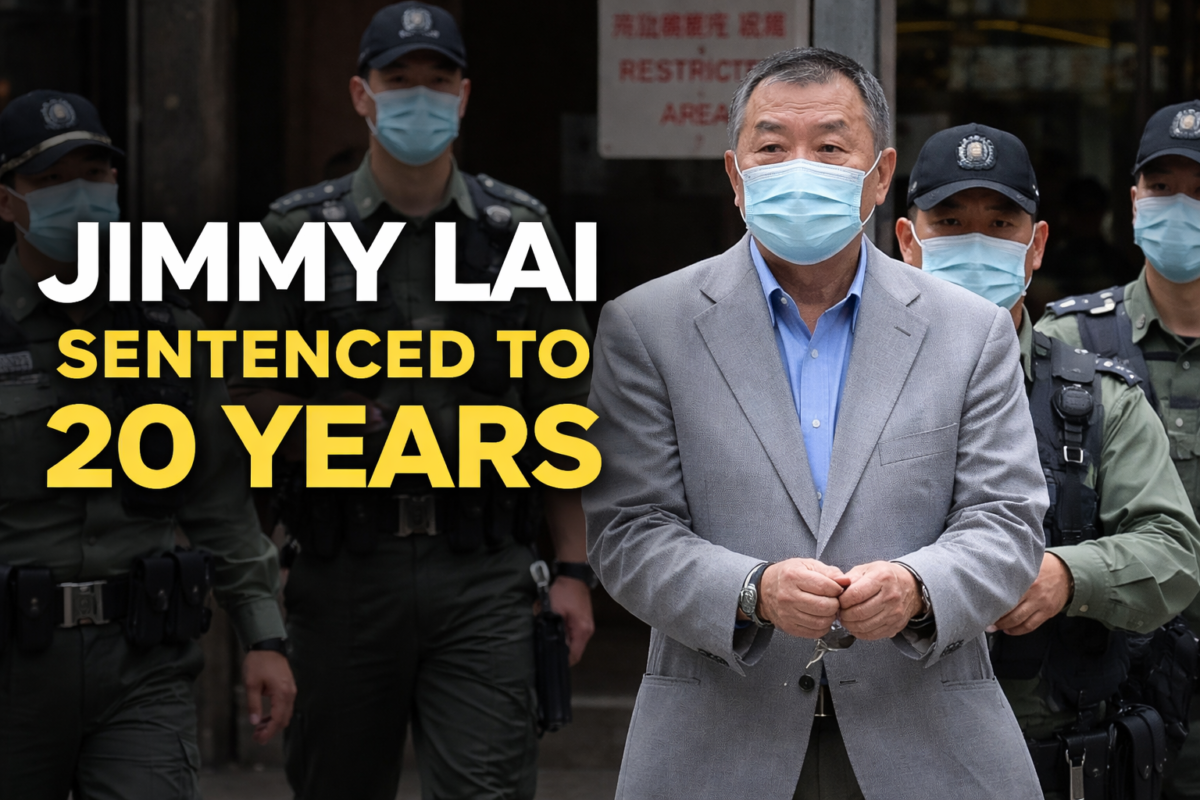
Jimmy Lai receives a 20-year prison sentence in Hong Kong under national security laws. Explore the case, charges, and its impact on media freedom. Hong Kong has once again drawn international attention after a court sentenced prominent media entrepreneur and pro-democracy figure Jimmy Lai to 20 years in prison. The verdict marks one of the most severe penalties imposed under Hong Kong’s national security framework and signals a decisive shift in how political dissent and media activity are treated in the city. This article explains the background of the case, the charges involved, public reactions, and the broader implications for press freedom and civil liberties.
Who Is Jimmy Lai?
Jimmy is a well-known businessman and media founder who rose from humble beginnings to establish one of Hong Kong’s most influential newspapers. Over the years, he became widely recognized for his outspoken criticism of government policies and his support for democratic reforms. His media platform was particularly known for its strong editorial stance and investigative reporting on political issues.
As political tensions intensified in Hong Kong, Lai’s public role as a critic of government authority increasingly placed him at the center of controversy.
Table of Contents
Background of the Case
Lai’s legal troubles began after the implementation of the national security law, which significantly expanded the definition of crimes related to national sovereignty and public order. He was arrested in 2020 and later charged in multiple cases connected to his media activities and international outreach.
Authorities argued that his actions went beyond journalism and crossed into activities that threatened national security. The case moved slowly through the courts, attracting widespread public and international interest.
Key Charges Explained
The court convicted Jimmy on two major charges that formed the basis of his sentencing:
Alleged Collusion with Foreign Entities
Prosecutors claimed that Lai engaged with foreign individuals and organizations to influence international opinion and encourage external pressure on Hong Kong and central authorities. These actions were presented as attempts to undermine national stability.
Publication of Seditious Content
The court also found that materials published by Lai’s media organization promoted hostility toward the government. Authorities argued that repeated publication of such content amounted to sedition under existing laws.
Together, these convictions led to the lengthy prison sentence handed down by the court.
Details of the 20-Year Sentence
The sentencing judge stated that the seriousness of the offenses required a strong deterrent. While the law allows for even harsher penalties, including life imprisonment, the court imposed a 20-year term after considering various factors.
Despite acknowledging Lai’s age and health condition, the court concluded that the offenses had far-reaching consequences. Legal experts note that, given his age, the sentence may effectively amount to life imprisonment.
Reaction Within Hong Kong
Local authorities defended the ruling, stating that the decision demonstrated the consistent application of the law and reinforced the importance of safeguarding national security. Officials emphasized that no individual is above the law, regardless of social or economic status.
The sentencing day saw heightened security and strong public interest, reflecting the case’s symbolic significance in Hong Kong’s evolving legal environment.
International Response and Criticism
The verdict has triggered strong reactions beyond Hong Kong. Human rights organizations, press freedom advocates, and political leaders in several countries have expressed concern over the severity of the punishment.
Critics argue that the case represents a major setback for freedom of expression and independent journalism. Many believe the ruling sends a warning to media professionals and activists, discouraging open political debate.
Some observers have also highlighted humanitarian concerns, pointing to Lai’s health and age as factors that make the sentence particularly severe.
Impact on Press Freedom
Hong Kong was once regarded as a regional hub for free media and open discourse. However, the closure of independent news outlets and the prosecution of prominent media figures have reshaped the city’s information landscape.
Read Also – TrumpRx Launches How the New Drug Pricing Site Cuts Costs
Journalists now operate under stricter legal boundaries, and many news organizations have altered their editorial approach to avoid legal risk. Media analysts say the sentencing reinforces a climate of caution and self-censorship.
What Lies Ahead?
Jimmy Lai retains the right to appeal his conviction and sentence, though legal experts say the chances of a successful appeal remain uncertain. Meanwhile, his imprisonment has become a defining case in discussions about Hong Kong’s political future.
The ruling is likely to influence how future cases involving media, activism, and national security are handled.
Conclusion
The 20-year prison sentence given to Jimmy Lai marks a turning point in Hong Kong’s legal and media environment. Beyond the fate of one individual, the case reflects a broader transformation in how dissent, journalism, and political expression are regulated.
As the world continues to watch developments in Hong Kong, the Jimmy case will remain a powerful symbol of the city’s changing identity and the evolving balance between security and freedom.





[…] Read Also – Jimmy Lai Sentenced to 20 Years: Hong Kong Media […]