

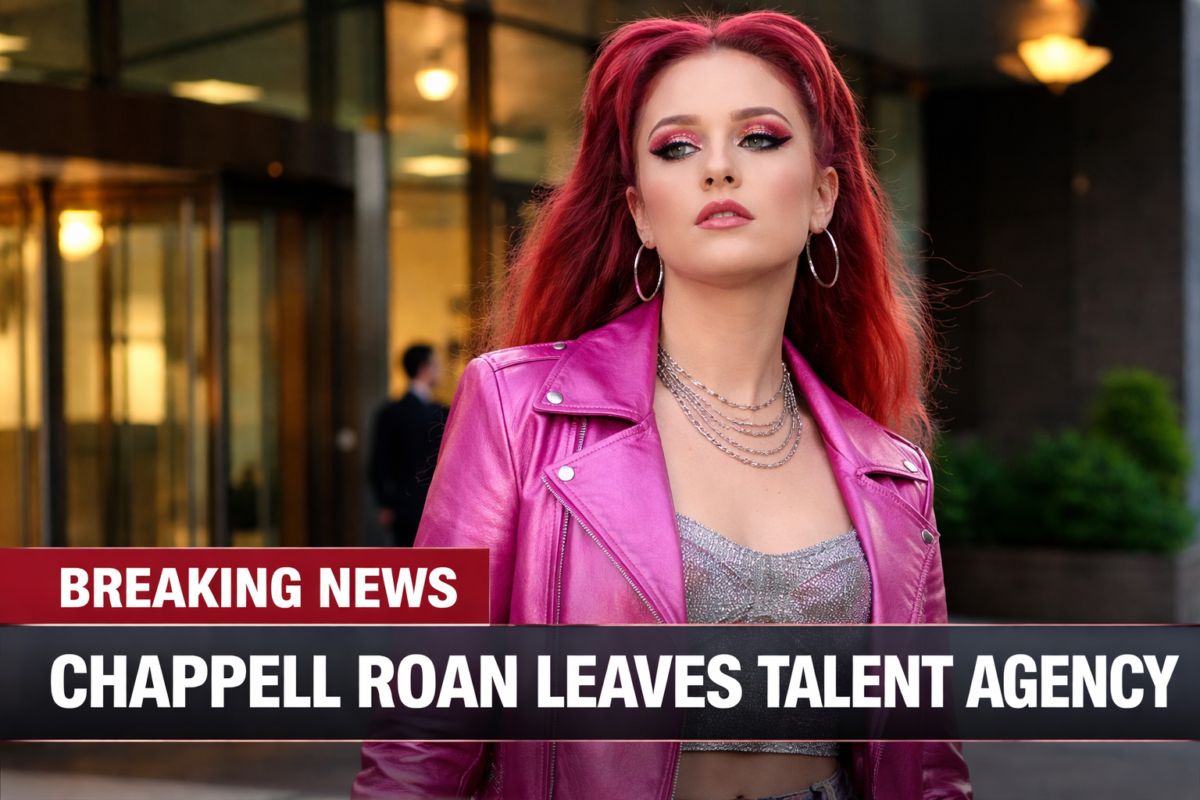
Chappell Roan parts ways with her talent agency amid leadership controversy, highlighting a growing demand for ethics and accountability in the music industry. Pop sensation Chappell Roan has officially ended her relationship with one of the world’s most influential talent agencies, making a decisive move that has reignited debate about ethics, accountability, and leadership within the entertainment industry. The decision, announced publicly by the artist, reflects a growing trend of performers demanding value alignment from those who represent them.
Roan’s choice goes beyond business strategy. It signals a clear boundary between artistic success and moral responsibility — a stance that has resonated strongly with fans, fellow artists, and industry professionals alike.
Why Chappell Roan Walked Away
Chappell Roan confirmed that she is no longer represented by the agency, explaining that she could not continue under leadership circumstances that conflicted with her personal and professional values. In her statement, Roan emphasized that no artist or team member should feel pressured to defend or overlook actions that feel morally wrong.
While expressing gratitude toward individual agents and staff members, she made it clear that leadership matters — and that ethical discomfort at the top creates an environment that many artists are unwilling to accept.
This wasn’t framed as a reactionary move. Instead, Roan positioned her departure as a thoughtful and necessary step to protect her integrity and the well-being of those around her.
Table of Contents
The Controversy Driving the Decision
The artist’s exit follows renewed scrutiny surrounding the agency’s leadership after newly surfaced documents revived discussions about past associations tied to a high-profile criminal case. These revelations sparked backlash across the entertainment sector, placing renewed pressure on executives and the companies they lead.
Although explanations and apologies were issued, the controversy raised larger questions about transparency, responsibility, and how much accountability leaders should bear for their past connections — even those formed years earlier.
For many artists, including Roan, the issue was not only about history but about how leadership responds when concerns resurface. Silence, deflection, or minimization has increasingly become unacceptable in a culture demanding openness and accountability.
A Growing Industry Reckoning
Chappell Roan is not alone. Her decision mirrors a broader shift happening across music, film, and sports, where artists are reevaluating their professional relationships through an ethical lens.
Several performers have publicly expressed discomfort remaining affiliated with organizations facing moral scrutiny. Some have demanded leadership changes, while others have exited quietly to avoid prolonged association with controversy.
Internally, reports suggest that pressure has mounted within agencies themselves, with employees and senior representatives questioning how leadership decisions impact both reputation and long-term trust.
This moment represents a cultural reckoning — one where power structures are being challenged by the very talent that fuels them.
What This Means for Chappell Roan’s Career
At just 27, Chappell Roan has already built a powerful career marked by critical acclaim, chart success, and a devoted fanbase. Walking away from a major agency is not without risk, but Roan’s timing suggests confidence rather than caution.
Her brand has long been associated with authenticity, bold self-expression, and emotional honesty. By prioritizing values over convenience, she reinforces those qualities — strengthening her connection with fans who increasingly expect public figures to act with principle, not just ambition.
Read Also – Jimmy Lai Sentenced to 20 Years: Hong Kong Media
Industry experts note that artists of Roan’s caliber rarely struggle to find representation. In fact, her stance may attract agencies and partners who align more closely with her worldview and long-term vision.
Why This Moment Matters Beyond One Artist
Roan’s departure highlights a significant shift in how success is defined in modern entertainment. Today’s artists are not just performers — they are decision-makers, advocates, and cultural leaders.
Audiences now watch how artists respond to controversy just as closely as they follow releases and tour announcements. Ethical clarity, once considered secondary to commercial success, has become a core component of public trust.
This shift places new pressure on agencies and executives to maintain not only profitable operations, but principled leadership.
The Bigger Picture: Values as Currency
Chappell Roan’s decision underscores a powerful truth: values are becoming currency in the entertainment industry. Artists are increasingly willing to walk away from powerful institutions if those institutions no longer align with their sense of right and wrong.
In doing so, Roan sends a message that creative success does not require moral compromise — and that representation should empower, not burden, the people it serves.
As the industry continues to evolve, moments like this may define a new standard — one where integrity, accountability, and transparency are no longer optional, but essential.






[…] Read Also – Chappell Roan Leaves Major Talent Agency Over Ethical […]