

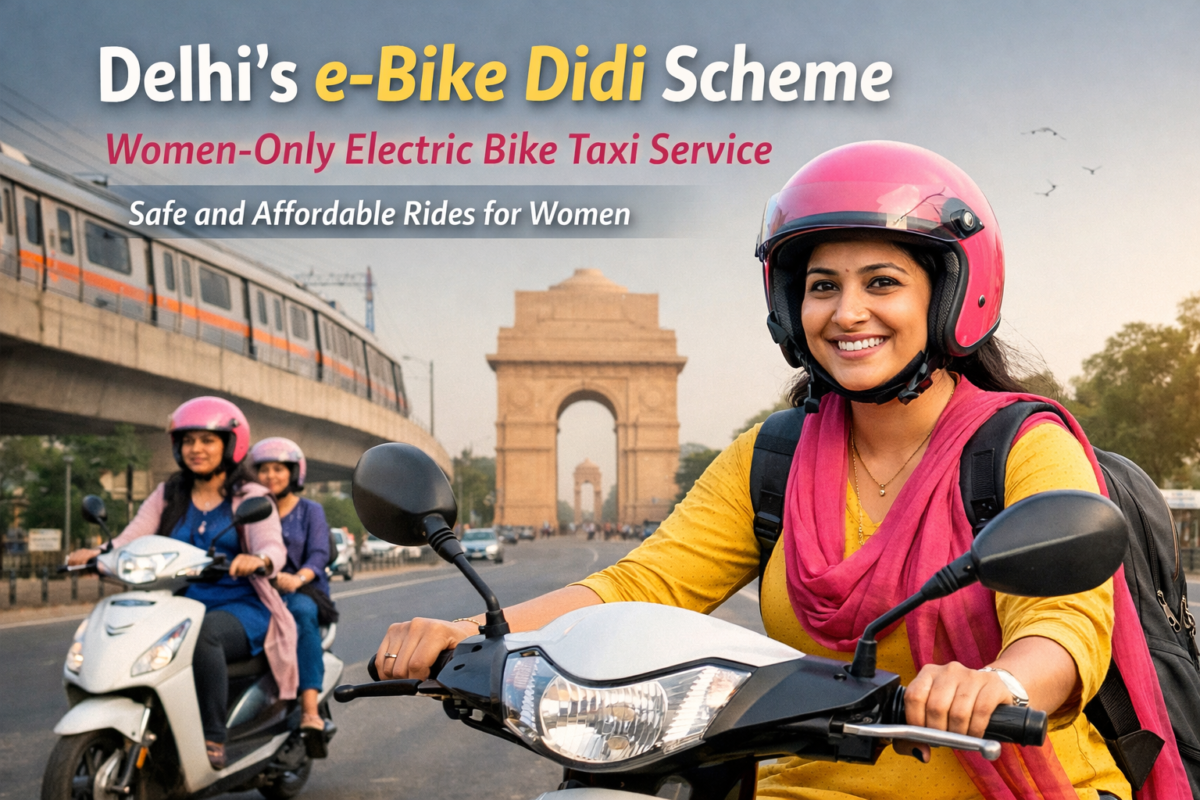
Delhi upcoming e-Bike Didi Scheme aims to provide women-only electric bike taxi services for safe, affordable, and eco-friendly last-mile connectivity. Here’s everything women commuters need to know about the initiative. India’s capital is preparing to introduce a transformative mobility initiative designed specifically for women. The proposed e-Bike Didi Scheme aims to provide safe, affordable, and eco-friendly last-mile connectivity through electric two-wheelers operated exclusively by women for women. If implemented successfully, this initiative could redefine urban transportation by combining safety, sustainability, and women’s empowerment into a single forward-thinking model.
As conversations around women’s safety and accessible public transport continue to grow, this scheme arrives at a crucial time for the city’s evolving mobility landscape.
Why a Women-Only Transport Initiative Is Needed
Urban commuting presents unique challenges for women. While metro networks and buses connect major routes, last-mile connectivity remains a persistent issue. The short distance between transit hubs and final destinations often becomes the most uncomfortable or unsafe part of a journey.
Many women report concerns about:
Traveling alone late in the evening
Limited safe transport options in crowded or isolated areas
High dependency on expensive ride-hailing services
Unreliable short-distance travel availability
The e-Bike Didi Scheme seeks to directly address these gaps by offering a women-centric travel solution that promotes both comfort and confidence.
Table of Contents
What Is the e-Bike Didi Scheme?
The e-Bike Didi Scheme is a proposed government-backed initiative that will introduce electric bike taxi services operated by trained women riders. The service will cater exclusively to female passengers and is expected to focus on short-distance travel, particularly around metro stations, bus depots, markets, and tourist hubs.
The key objective is simple:
Make commuting safer and more accessible for women while promoting clean energy transportation.
e-Bike Didi Scheme – Key Features of the Scheme
- Women-Only Rides
Both riders and passengers will be women. This model is designed to create a safer commuting ecosystem and encourage more women to travel independently.
- Electric Two-Wheelers
The use of electric bikes supports the city’s clean air initiatives. These vehicles produce zero tailpipe emissions, are quieter than traditional petrol vehicles, and contribute to reducing urban pollution levels.
- Focus on Last-Mile Connectivity
The scheme will primarily serve short routes — connecting metro stations, bus stops, and commercial areas to nearby neighborhoods. By targeting this crucial gap in urban mobility, the initiative aims to make daily commuting smoother.
- Affordable Pricing
While official fare structures are yet to be announced, the service is expected to remain competitively priced, ensuring accessibility for students, working professionals, and homemakers alike.
Empowering Women Through Employment
Beyond improving mobility, the e-Bike Didi Scheme has strong economic empowerment potential. Women will have the opportunity to join as licensed e-bike riders, opening doors to stable income and financial independence.
Eligibility and Participation
Though final guidelines are awaited, participation may include:
Women within a specific age bracket
Valid driving licence holders
Residents of the city
Completion of safety and operational training
Training programs are expected to cover:
Road safety and defensive driving
Customer interaction
Digital booking management
Basic vehicle maintenance
By equipping women with professional skills and steady earning opportunities, the initiative strengthens both economic participation and confidence.
Read Also – Bharat Taxi ₹500 Co-Ownership Model How Drivers Become
e-Bike Didi Scheme – How the Service May Operate
The scheme is likely to operate through a mobile booking platform, allowing passengers to book rides digitally. Features may include:
Real-time rider tracking
Transparent fare calculation
Secure payment options
Verified rider identification
Such digital integration will help ensure transparency, safety, and convenience — essential components of modern urban mobility solutions.
Potential Launch Areas
Initial deployment is expected in high-footfall and high-demand zones, including:
Major metro stations
Tourist attractions
Commercial districts
Busy marketplaces
Educational institutions
Starting in strategic zones allows authorities to test the model, gather feedback, and expand gradually based on demand and operational success.
Environmental Benefits
The environmental impact of switching to electric bikes cannot be overlooked. With rising concerns about air quality, the shift to electric mobility aligns with broader sustainability goals.
Electric two-wheelers offer:
Zero direct emissions
Lower operating costs
Reduced noise pollution
Smaller road footprint compared to cars
By integrating green mobility with women’s safety initiatives, the scheme represents a dual-benefit policy move.
Impact on Tourism and Public Confidence
Women travelers — both residents and tourists — often prioritize safety when exploring new areas. A women-only ride service near tourist spots could significantly enhance travel comfort.
Safer short-distance options may encourage:
Solo travel by women
Increased evening mobility
Greater participation in public events
More economic activity in commercial zones
Over time, such initiatives can help build a stronger sense of trust in public transport systems.
What Happens Next?
The proposal is currently under planning and consultation stages. Authorities are working on policy frameworks, operational logistics, and department coordination before formal rollout. A pilot phase is expected before full-scale implementation. This trial period will likely evaluate:
Demand levels
Safety effectiveness
Operational feasibility
Public response
If successful, the program may expand across more districts and possibly inspire similar models in other Indian cities.
A Step Toward Safer, Greener Mobility
The e-Bike Didi Scheme represents more than just a transport project — it symbolizes a progressive shift toward inclusive urban planning. By combining women’s safety, employment generation, and clean energy transport, the initiative addresses multiple urban challenges at once.
If implemented effectively, this scheme could set a new benchmark for women-focused mobility solutions in India. For thousands of daily commuters, it may soon mean safer streets, shorter waits, and more independence — one electric ride at a time.






[…] Read Also – Delhi e-Bike Didi Scheme Women Electric Bike Taxi Service […]