

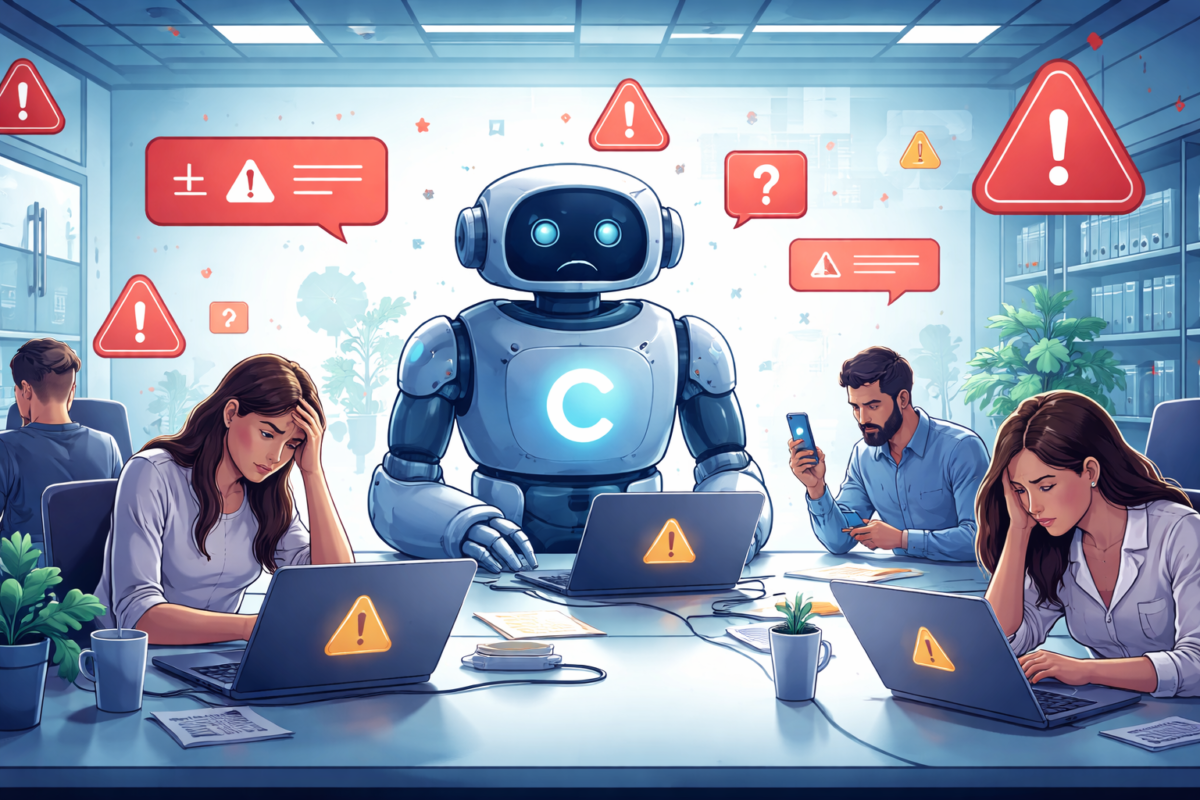
Claude AI experienced a major global outage, disrupting chat services and user access. Discover what caused the downtime, its impact on productivity, and key lessons for AI users. Artificial intelligence tools have become essential for professionals, businesses, and creators worldwide. From writing content and generating code to answering complex queries, AI assistants are now deeply integrated into daily workflows. One of the most popular AI platforms, Claude, recently experienced a major service outage that disrupted users across the globe.
The unexpected downtime sparked conversations about AI reliability, infrastructure strength, and the growing dependence on intelligent systems. Here’s a detailed look at what happened, why it matters, and what users can learn from it.
A Widespread Service Disruption
Over a 24-hour period, thousands of users reported issues accessing Claude. The disruption affected multiple regions and platforms, making it a global incident rather than a localized technical problem.
Users encountered error messages, failed response generations, login issues, and system timeouts. For many professionals who rely on Claude for writing, research, customer communication, and coding support, the outage caused significant productivity setbacks.
Although the platform acknowledged the issue and worked toward restoration, the downtime lasted long enough to raise concerns about system resilience and reliability.
Table of Contents
Claude AI Down – Which Services Were Affected?
The outage impacted several core features of the AI platform. While some backend systems appeared to remain partially functional, user-facing services experienced noticeable failures.
- Chat Interface Failures
The most reported issue involved the main conversational interface. Users were unable to initiate new chats or receive responses to prompts. Many sessions either froze mid-conversation or returned server error messages.
For content creators, developers, and business professionals, this meant losing access to a key productivity tool.
- Login and Authentication Problems
Some users experienced difficulties logging into their accounts. Authentication errors prevented access to dashboards, saved conversations, and subscription features.
This created additional frustration, particularly for paid users who depend on uninterrupted service.
- Mobile App Instability
Reports also indicated instability within mobile applications. Crashes, unresponsive screens, and failed query submissions were common during the disruption window.
Claude – What May Have Caused the Outage?
While the exact technical cause was not publicly detailed, outages of this scale are typically linked to one or more of the following factors:
Server Overload: A sudden spike in traffic can overwhelm infrastructure capacity.
Backend System Failures: Issues within internal databases or processing servers can interrupt functionality.
Cloud Infrastructure Disruptions: AI platforms depend heavily on cloud computing networks. Any instability at that level can cascade into widespread downtime.
Software Deployment Errors: Updates or patches may unintentionally introduce bugs or compatibility issues.
Given the growing adoption of AI tools, scaling infrastructure to match demand remains a major challenge for companies operating large language models.
The Growing Dependence on AI Tools
This incident highlights an important trend: professionals increasingly rely on AI as a core work assistant rather than a supplementary tool.
When AI services go offline, the impact can be immediate:
Content production slows down
Read Also – NVIDIA Planned $100 Billion Investment in OpenAI Faces Delay
Development timelines get delayed
Research workflows stall
Customer service automation pauses
Some users even reported noticeable drops in daily productivity during the outage period. This demonstrates how quickly AI has become embedded in routine business operations.
Reliability as a Competitive Advantage
In today’s competitive AI landscape, performance and uptime are just as important as intelligence and features. Users expect AI assistants to be available 24/7, especially when they are integrated into critical tasks.
Frequent disruptions can affect:
User trust
Subscription renewals
Enterprise adoption decisions
Brand reputation
As more companies adopt AI for mission-critical processes, reliability will likely become one of the most important differentiators among AI providers.
Lessons for Businesses and Individual Users
The outage serves as a reminder that no digital service is immune to technical failure. Both companies and individual users can take proactive steps to reduce risk.
- Avoid Single-Tool Dependence
Relying entirely on one AI assistant can create operational vulnerability. Keeping alternative tools available ensures continuity during unexpected downtime.
- Maintain Offline Workflows
For essential tasks, having backup documentation, templates, or manual processes can prevent complete workflow disruption.
- Monitor Service Status
Regularly checking platform status pages during disruptions helps manage expectations and plan around downtime.
The Future of AI Infrastructure
As AI adoption accelerates, infrastructure demands will continue to grow. Providers must invest heavily in:
Scalable cloud architecture
Redundant server systems
Advanced monitoring tools
Faster incident response mechanisms
AI platforms are no longer experimental technologies — they are core productivity engines. That means service reliability standards must match those of established enterprise software systems.
Final Thoughts
The recent Claude AI outage underscores both the power and fragility of modern artificial intelligence systems. While the platform remains a leading AI assistant trusted by many users, the disruption highlights the importance of infrastructure stability in an increasingly AI-driven world.
For businesses and individuals alike, the key takeaway is clear: AI can dramatically enhance productivity, but contingency planning is essential. As AI tools continue evolving, reliability will play a crucial role in shaping user trust and long-term adoption.






[…] Read Also – Claude AI Down: What Caused the Global Outage […]
[…] Read Also – Claude AI Down: What Caused The Global Outage […]