

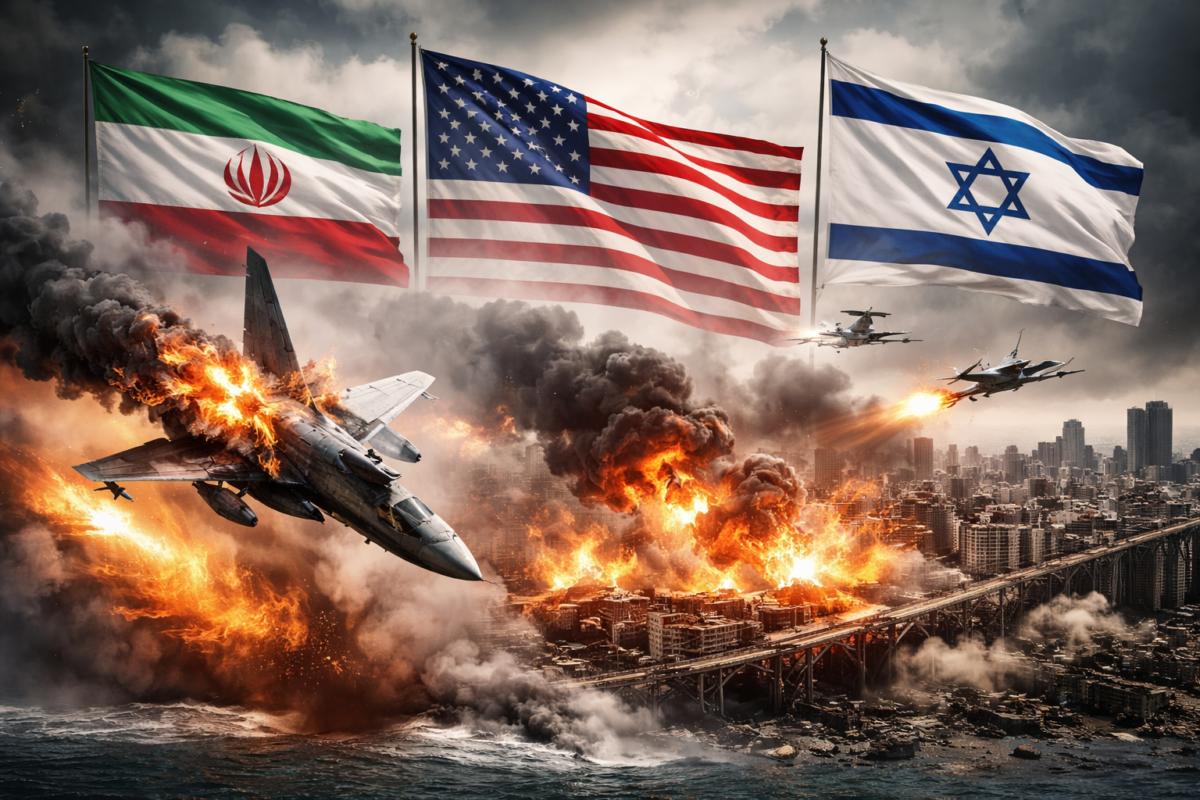
Iran war, Middle East conflict 2026, US Iran tensions, Israel-Lebanon strikes, geopolitical crisis, oil market impact, war news, global tensions, Hezbollah conflict, Iran air defence. The Middle East is witnessing a sharp escalation in conflict as tensions between Iran, the United States, and Israel intensify. What began as a series of strategic confrontations has now evolved into a broader regional crisis. Recent developments—including Iran’s claim of shooting down US warplanes and Israel’s expansion of military operations into Lebanon—highlight the growing scale and seriousness of the situation. The conflict is no longer limited to isolated incidents but is rapidly transforming into a multi-front geopolitical struggle.
Iran War Reports: Downing of US Aircraft
A major turning point in the conflict came when Iran announced that it had successfully downed two US military aircraft. According to official statements, one aircraft was shot down over Iranian territory, while another crashed in nearby waters. Rescue operations were reportedly launched, with at least one crew member recovered and another unaccounted for.
If confirmed, this development represents a significant escalation. Direct losses of advanced military aircraft indicate that the confrontation has moved beyond proxy engagements into more direct military confrontation. It also suggests that Iran’s air defence systems are capable of countering high-tech aerial operations, potentially reshaping how future missions are conducted by opposing forces.
This incident has raised concerns among defence analysts, as it increases the likelihood of retaliation and further escalation. The risks associated with aerial missions in contested zones are now significantly higher, which may alter military strategies in the coming days.
Table of Contents
Continued Airstrikes on Strategic Targets
In response to ongoing tensions, US and allied forces have continued to carry out airstrikes on key Iranian targets. These include critical infrastructure such as industrial zones and facilities linked to energy production. The goal appears to be weakening Iran’s operational and economic capabilities.
Such strikes, however, come with broader consequences. Damage to energy facilities can disrupt local economies and create long-term setbacks for infrastructure development. There is also a heightened risk of civilian casualties and environmental damage, particularly when industrial sites are targeted.
The ongoing attacks have fuelled anger within Iran, strengthening domestic resolve and increasing anti-Western sentiment. This dynamic makes diplomatic resolution even more difficult, as public pressure influences political decisions on all sides.
Israel Expands Military Operations into Lebanon
While tensions escalate with Iran, Israel has simultaneously intensified its operations in Lebanon. Airstrikes have targeted key infrastructure, including bridges and transportation routes, particularly in and around Beirut. These actions are aimed at disrupting supply lines and weakening armed groups operating in the region.
The expansion of military operations into Lebanon marks a significant broadening of the conflict. It reflects growing concerns about cross-border threats and the involvement of regional allies aligned with Iran. By targeting infrastructure, Israel aims to limit mobility and reduce the operational capabilities of its adversaries.
However, these strikes have also led to widespread disruption for civilians. The destruction of roads and bridges affects daily life, restricts access to essential services, and contributes to mass displacement. Many residents have been forced to leave their homes, seeking safety in less affected areas.
Impact on Regional Stability
The conflict is no longer confined to specific locations—it is now affecting the broader stability of the Middle East. One of the most critical concerns is the potential disruption of key global trade and energy routes. The Strait of Hormuz, a vital passage for oil shipments, remains a sensitive hotspot.
Any escalation in this area could have serious global consequences. Even the threat of disruption has already caused fluctuations in oil prices and increased uncertainty in international markets. Countries that rely heavily on energy imports are closely monitoring the situation and preparing contingency plans.
Additionally, the conflict is influencing global political alignments. Nations are being forced to take positions, either through diplomatic statements or strategic actions, which could further complicate efforts to de-escalate tensions.
Growing Humanitarian Crisis
As military operations intensify, the humanitarian impact continues to worsen. Civilians in both Iran and Lebanon are facing the consequences of ongoing airstrikes and infrastructure damage. Access to essential services such as healthcare, electricity, and clean water is becoming increasingly limited in affected areas.
Displacement is another major concern. Thousands of people have been forced to flee their homes, creating pressure on neighbouring regions and humanitarian organizations. Vulnerable groups, including children and the elderly, are at the highest risk.
Read Also – Iran Refuses Peace Without Compensation & Guarantees
Relief efforts are being challenged by the scale of destruction and the ongoing nature of the conflict. Aid organizations are calling for immediate measures to ensure safe access to affected populations and to prevent further loss of life.
Conclusion
The current escalation in the Iran conflict marks a critical moment with far-reaching implications. The reported downing of US warplanes and the expansion of Israeli operations into Lebanon signal a shift toward a more intense and widespread confrontation.
With rising military activity, increasing humanitarian concerns, and growing global implications, the situation remains highly volatile. Without effective diplomatic intervention, the conflict risks spiralling into a larger regional crisis with long-term consequences.
The coming days will be crucial in determining whether tensions can be contained or whether the conflict will continue to escalate, reshaping the geopolitical landscape of the Middle East.






[…] Read Also – Iran War Escalation 2026 US Aircraft Downed, Israel Expands […]