

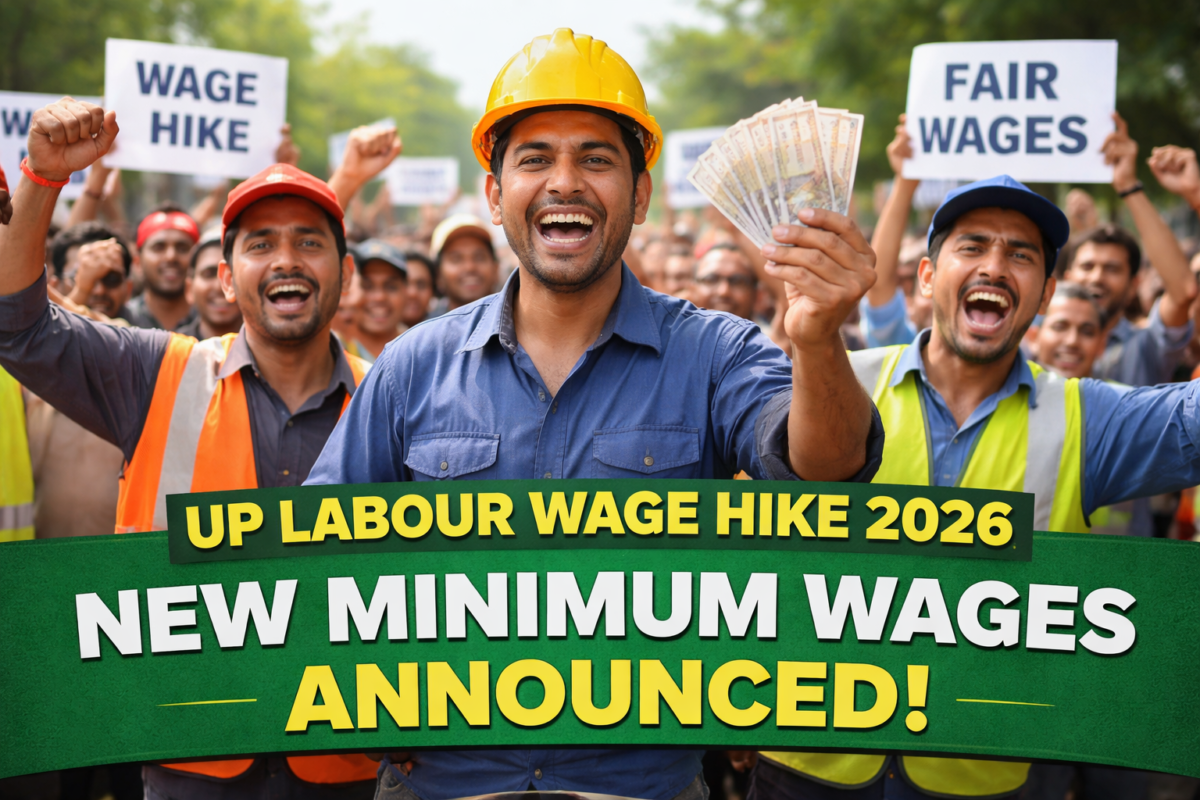
UP Labour wages increases minimum by up to 21% from April 1, 2026. Check updated salary rates for unskilled, semi-skilled, and skilled workers. The Uttar Pradesh government has announced a major increase in minimum wages across the state, following widespread protests by industrial workers in Noida and surrounding regions. Effective from April 1, 2026, this decision is being viewed as a crucial step toward improving worker welfare and addressing rising cost-of-living concerns.
In this article, we explore the reasons behind the wage hike, the revised salary structure, and its impact on workers and industries.
Why Did the UP Government Increase Wages?
The wage revision comes after large-scale demonstrations by factory workers, particularly in industrial hubs like Noida and Ghaziabad. Workers raised concerns over stagnant wages despite rising inflation and increasing daily expenses. The protests highlighted long-standing issues such as inadequate pay, lack of benefits, and growing financial stress among laborers.
In response, the state government stepped in to review the situation and implemented an interim wage hike. The move aims to restore stability, improve labor conditions, and prevent further unrest in key industrial zones.
UP Labour Wage – Table of Contents
Key Highlights of the Wage Hike
Minimum wages increased by up to 21%
New rates are effective from April 1, 2026
Wage structure revised based on skill levels and geographic regions
Focus on addressing inflation and rising living costs
This revision is one of the most significant wage adjustments in recent years for the state.
New Minimum Wages Structure (2026)
The updated wages differ based on skill category and region. Below is a simplified overview:
- Gautam Buddh Nagar & Ghaziabad (Highest Increase)
Unskilled workers: ₹13,690 per month
Semi-skilled workers: ₹15,059 per month
Skilled workers: ₹16,600+ per month
These industrial districts received the highest increase due to the scale of protests and their economic importance.
- Other Municipal Corporation Areas
Unskilled workers: Around ₹13,000 per month
Semi-skilled workers: Around ₹14,300 per month
Skilled workers: Around ₹16,000 per month
- Remaining Districts of Uttar Pradesh
Unskilled workers: Around ₹12,300 per month
Semi-skilled workers: Around ₹13,500 per month
Skilled workers: Around ₹15,200 per month
Categories of Workers Covered
The revised wage system is structured across three primary categories:
Unskilled Workers
These workers perform basic manual tasks that do not require specialized training or experience.
Semi-Skilled Workers
Workers in this category have some level of training or hands-on experience in their field.
Skilled Workers
These include individuals with technical expertise, certifications, or specialized skills required for more complex tasks.
This classification ensures a fair and balanced approach to compensation.
Impact on Workers
The wage hike is expected to benefit a large number of workers employed in manufacturing, construction, and service sectors.
Key Benefits:
Improved financial stability
Better ability to manage household expenses
Increased job satisfaction and morale
However, some workers feel the increase still falls short of expectations, as many had demanded significantly higher monthly wages.
Impact on Industries and Employers
While the wage hike brings relief to workers, it also introduces new challenges for businesses.
Read Also – WhatsApp Username Feature Chat Without Sharing Phone
Possible Challenges:
Increased labor costs
Pressure on small and medium enterprises
Adjustments in pricing and production strategies
Potential Advantages:
Higher worker productivity
Reduced employee turnover
Improved workplace relations
In the long run, better wages can contribute to a more stable and efficient workforce.
Government’s Stand and Future Outlook
The state government has emphasized strict implementation of the revised wage structure. Employers have been directed to comply with labor regulations, including fair pay, working conditions, and timely disbursement of salaries.
This move could also influence similar policy changes in other industrial states, especially where labor concerns are rising.
Conclusion
The Uttar Pradesh wage hike of up to 21% marks a significant development in the state’s labor policy. Triggered by worker protests, the decision reflects the growing need for fair compensation in an evolving economic environment.
While the revision offers immediate relief, it also highlights the ongoing challenge of balancing worker welfare with industrial growth. As economic conditions continue to change, regular wage reviews and stronger labor policies will be essential for sustainable development.