
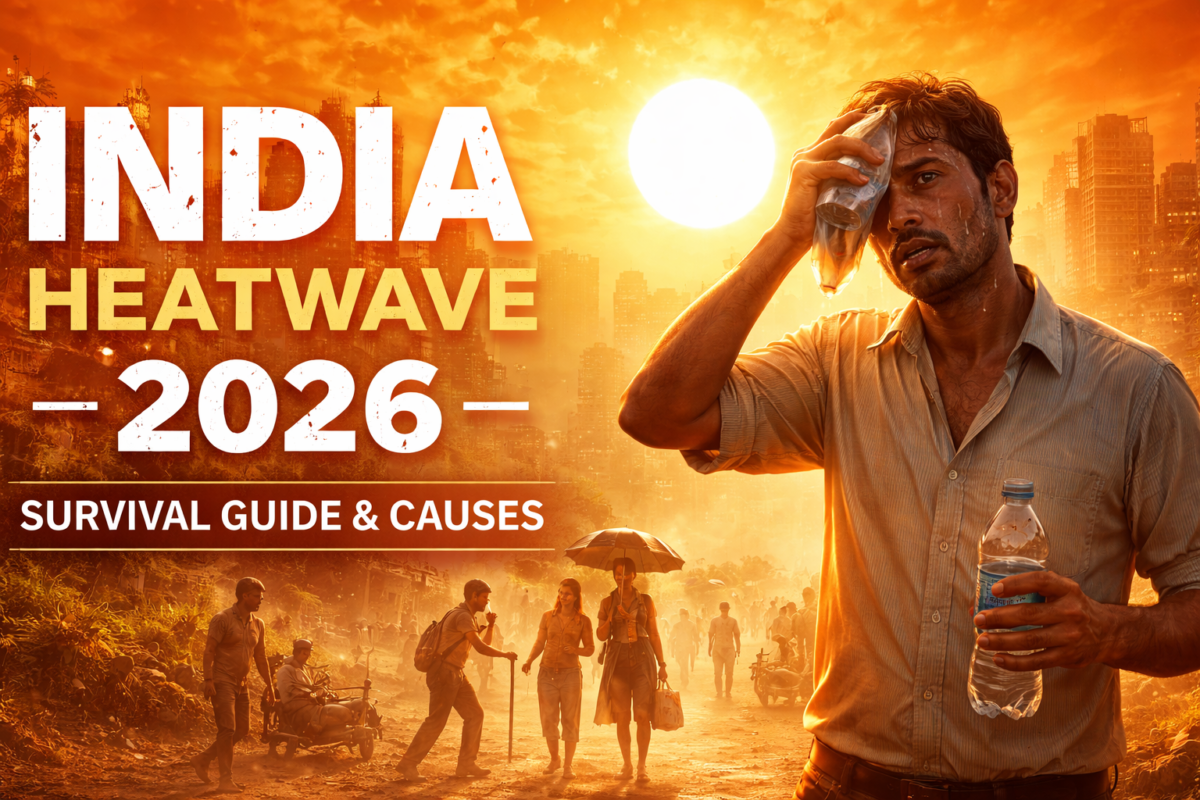
India Heatwave 2026 explained—discover the causes behind record temperatures, its impact on health and daily life, and essential survival tips to stay safe in extreme heat. The summer of 2026 is proving to be one of the most extreme in recent history. Across the country, temperatures are soaring well beyond seasonal averages, affecting daily life, public health, and essential resources. What was once considered a harsh summer has now evolved into a dangerous and prolonged heatwave, impacting millions.
This blog explores the key reasons behind these record-breaking temperatures and offers a practical survival guide to help you stay safe during this intense heat.
India Heatwave 2026 – What’s Causing the 2026 Heatwave?
The ongoing heatwave is not an isolated weather event—it is the result of multiple environmental and climatic factors combining at once.
- Climate Change Driving Extreme Weather
The most significant factor behind rising temperatures is global climate change. Increased greenhouse gas emissions have steadily raised global temperatures over the years. As a result, heatwaves are becoming more frequent, more intense, and longer-lasting.
Regions that once experienced moderate summers are now seeing extreme heat conditions, making this a nationwide concern rather than a regional one.
- Impact of El Niño
The El Niño climate pattern is another major contributor. It involves the warming of ocean waters in the Pacific, which disrupts weather patterns across the globe. In this region, El Niño often leads to reduced rainfall and higher-than-normal temperatures, intensifying heatwave conditions.
Table of Contents
- Urban Heat Effect
Major cities are experiencing even higher temperatures due to dense infrastructure. Concrete buildings, asphalt roads, and limited green spaces trap heat during the day and release it slowly at night. This creates a “heat island” effect, making urban areas significantly hotter than nearby rural regions.
- Weak or Delayed Monsoon
The delayed onset or weak performance of seasonal rains has further worsened the situation. Without rainfall to cool the land, heat continues to build up, extending the duration and intensity of the heatwave.
Impact of the Heatwave
The effects of this extreme weather go beyond discomfort—they are affecting health, resources, and the economy.
Rising Health Risks
High temperatures increase the risk of dehydration, heat exhaustion, and heatstroke. Vulnerable groups such as children, elderly individuals, and outdoor workers are especially at risk. Hospitals are already reporting a rise in heat-related illnesses.
Pressure on Power and Water Supply
As more people rely on cooling systems like air conditioners and fans, electricity demand has surged. This has led to power outages in several areas. At the same time, water resources are under stress due to increased consumption and reduced replenishment.
Agricultural Challenges
Farmers are facing crop damage due to extreme heat and lack of water. This could lead to reduced agricultural output and a potential rise in food prices in the near future.
Survival Guide: How to Stay Safe in India Heatwave 2026
While we cannot control the weather, we can take steps to protect ourselves and minimize risks.
- Stay Hydrated
Drink water regularly throughout the day, even if you don’t feel thirsty. Avoid drinks like alcohol, caffeine, and sugary beverages, as they can lead to dehydration.
Tip: Always carry a water bottle when stepping outside.
- Avoid Peak Heat Hours
Try to stay indoors during the hottest part of the day, typically between noon and late afternoon. If going outside is necessary, seek shade whenever possible.
- Wear Suitable Clothing
Choose light-colored, loose-fitting cotton clothes. These help your body stay cool by allowing better air circulation and reducing heat absorption.
- Keep Your Body Cool
Take cool showers or baths
Use damp cloths on your forehead and neck
Keep your living space ventilated
Simple cooling techniques can make a big difference in managing body temperature.
- Eat Light and Hydrating Foods
Include fruits and vegetables with high water content, such as watermelon, cucumber, and citrus fruits. Avoid heavy and spicy meals, which can increase body heat.
- Care for Vulnerable People
Ensure that children, elderly family members, and pets remain cool and well-hydrated. Never leave anyone inside a parked vehicle, even for a short period.
Read Also – Why India Slipped To 6th Economy And Growth Outlook To 2031
- Know the Signs of Heatstroke
Watch for symptoms such as dizziness, confusion, rapid heartbeat, and unusually high body temperature. Immediate medical attention is critical in such cases.
Long-Term Solutions to Prevent Future India Heatwave 2026
Short-term precautions help us cope, but long-term strategies are essential to reduce the impact of such extreme conditions in the future.
- Increase Green Spaces
Planting trees and expanding green areas can help reduce temperatures, especially in urban environments. Vegetation provides natural cooling and improves air quality.
- Better Urban Planning
Cities need to adopt heat-resistant infrastructure, including reflective materials and improved ventilation designs. Smart planning can significantly reduce heat buildup.
- Water Management
Efficient use of water, rainwater harvesting, and conservation practices are crucial to managing shortages during extreme summers.
- Strong Climate Action
Reducing carbon emissions through renewable energy and sustainable practices is essential. Policy changes and public awareness can play a major role in slowing down climate change.
Conclusion
The India Heatwave 2026 is more than just an unusually hot summer—it is a warning sign of changing climate patterns. As temperatures continue to rise, awareness, preparedness, and responsible action are more important than ever.
By understanding the causes and adopting both immediate and long-term solutions, we can protect ourselves and contribute to a more sustainable future. Staying informed and proactive is the key to surviving—and eventually reducing—the impact of extreme heat.