

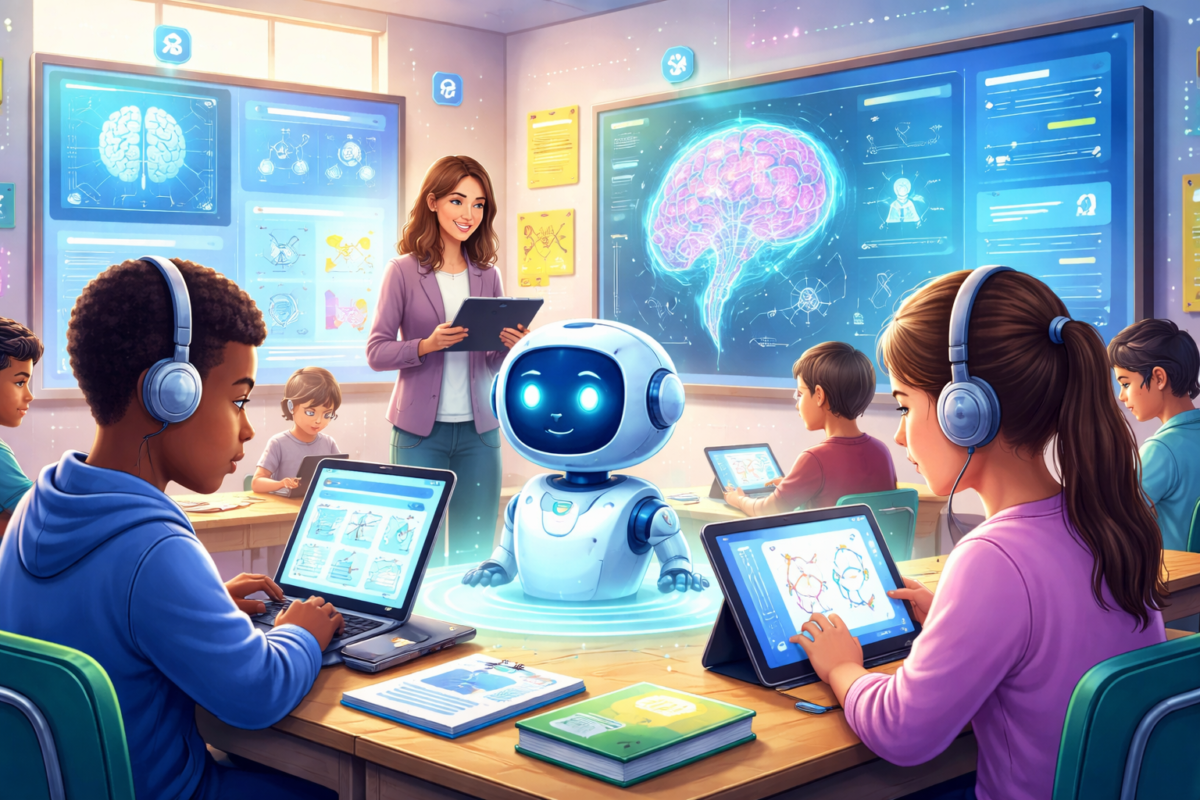
Discover how AI pioneer Geoffrey Hinton highlights education as one of the best uses of artificial intelligence, enabling personalized learning, supporting teachers, and preparing students for an AI-driven future. Artificial intelligence is transforming industries, reshaping economies, and redefining how people interact with technology. From automation to advanced analytics, Artificial Intelligence continues to expand its influence across the world. However, amid the excitement and debate surrounding AI’s future, one perspective stands out—that of Geoffrey Hinton, widely known as one of the key figures behind modern AI development.
Hinton has often spoken about both the opportunities and risks associated with artificial intelligence. Among the many applications he has observed, one stands out as particularly impactful and practical: the use of AI in education. This area highlights how Artificial Intelligence can enhance human potential rather than replace it.
How AI Is Transforming Education
Personalized Learning at Scale – One of the most powerful advantages of Artificial Intelligence in education is its ability to personalize learning experiences. Traditional classrooms often follow a one-size-fits-all approach, where every student receives the same lessons at the same pace. However, students learn differently—some grasp concepts quickly, while others need additional support.
Artificial Intelligence-powered learning platforms can analyze a student’s progress, identify knowledge gaps, and adapt lessons accordingly. For example, if a student struggles with a particular topic, the system can automatically provide more exercises, explanations, or alternative learning materials. At the same time, students who master concepts quickly can move ahead without being slowed down.
This adaptive learning model makes education more efficient and inclusive, ensuring that students receive support tailored specifically to their needs.
Table of Contents
Intelligent Tutoring Systems
Another significant benefit of Artificial Intelligence is the development of intelligent tutoring systems. These tools act like digital mentors that guide students through subjects step by step. They can answer questions, explain complex topics, and provide feedback instantly.
Unlike traditional tutoring, which can be expensive or limited by availability, Artificial Intelligence tutors can be accessible anytime. This accessibility has the potential to bridge educational gaps, particularly in regions where quality education resources are limited.
By making learning assistance widely available, Artificial Intelligence can democratize education and help millions of students improve their academic performance.
Supporting Teachers Instead of Replacing Them
Reducing Administrative Burden -Teachers often spend a significant amount of time on repetitive tasks such as grading assignments, organizing lesson plans, and managing records. Artificial Intelligence tools can automate many of these responsibilities, allowing educators to focus on teaching and mentoring students.
For instance, Artificial Intelligence systems can evaluate quizzes, track performance trends, and generate reports that help teachers understand where students need extra support. With this information readily available, educators can design better learning strategies and engage more effectively with their students.
Enhancing Classroom Interaction
Artificial Intelligence also has the potential to improve classroom experiences by offering insights into student engagement and understanding. Teachers can use AI-generated data to identify which topics are challenging for the class and adjust their approach accordingly.
Instead of replacing educators, Artificial Intelligence acts as a supportive tool that amplifies their impact. Teachers remain central to the learning process, providing guidance, inspiration, and emotional support—elements that technology alone cannot replicate.
Why Education Is a Powerful Artificial Intelligence Use Case
A Positive and Constructive Application
AI is often discussed in the context of job automation or potential risks. While these conversations are important, focusing on education reveals a more constructive side of the technology. In learning environments, Artificial Intelligence helps people develop skills, gain knowledge, and improve their opportunities.
This makes education one of the most meaningful and widely beneficial uses of Artificial Intelligence. Rather than creating uncertainty, it empowers individuals and prepares them for the future.
Preparing Students for an Artificial Intelligence-Driven World
As Artificial Intelligence becomes increasingly integrated into everyday life, future generations will need to understand how to work alongside intelligent systems. By introducing AI-powered tools in education today, students can become more comfortable with technology and develop essential digital skills.
This preparation ensures that students are not just passive users of Artificial Intelligence but active participants in shaping how it evolves. Learning to collaborate with intelligent systems could become one of the most valuable abilities in the modern workforce.
Balancing Innovation With Responsibility
While Artificial Intelligence in education offers exciting possibilities, it also raises important questions. Issues such as data privacy, algorithmic bias, and responsible implementation must be carefully addressed. Educational institutions need clear guidelines to ensure that AI tools are used ethically and effectively.
Developers and policymakers also play a crucial role in ensuring that Artificial Intelligence benefits society as a whole. Transparent systems, fair algorithms, and human oversight are essential to maintaining trust in AI technologies.
By addressing these challenges early, the education sector can become a model for responsible Artificial Intelligence adoption.
REad Also – Moya Humanoid Robot China Life-Like AI That Walks & Smiles
The Future of Artificial Intelligence in Learning
Looking ahead, the role of Artificial Intelligence in education is likely to grow significantly. Future classrooms may include advanced virtual tutors, immersive simulations, and highly personalized learning journeys powered by intelligent algorithms.
Students might learn complex subjects through interactive experiences that adapt in real time, while teachers use Artificial Intelligence insights to craft highly engaging lessons. This combination of human expertise and machine intelligence could redefine how knowledge is shared and understood.
The ultimate goal is not to replace traditional education but to enhance it—making learning more accessible, efficient, and engaging for everyone.
Conclusion
Artificial intelligence continues to evolve at an extraordinary pace, influencing nearly every sector of society. Yet among its many applications, education stands out as one of the most promising and beneficial. By enabling personalized learning, supporting teachers, and preparing students for a technology-driven future, Artificial Intelligence can play a transformative role in shaping the next generation.
The perspective shared by Geoffrey Hinton highlights an important point: the true value of Artificial Intelligence lies not just in technological advancement but in how it improves human lives. When used responsibly and thoughtfully, AI has the power to unlock opportunities, expand knowledge, and build a smarter, more capable world.






[…] Read Also – AI and Geoffrey Hinton on the Best Use of Artificial […]