

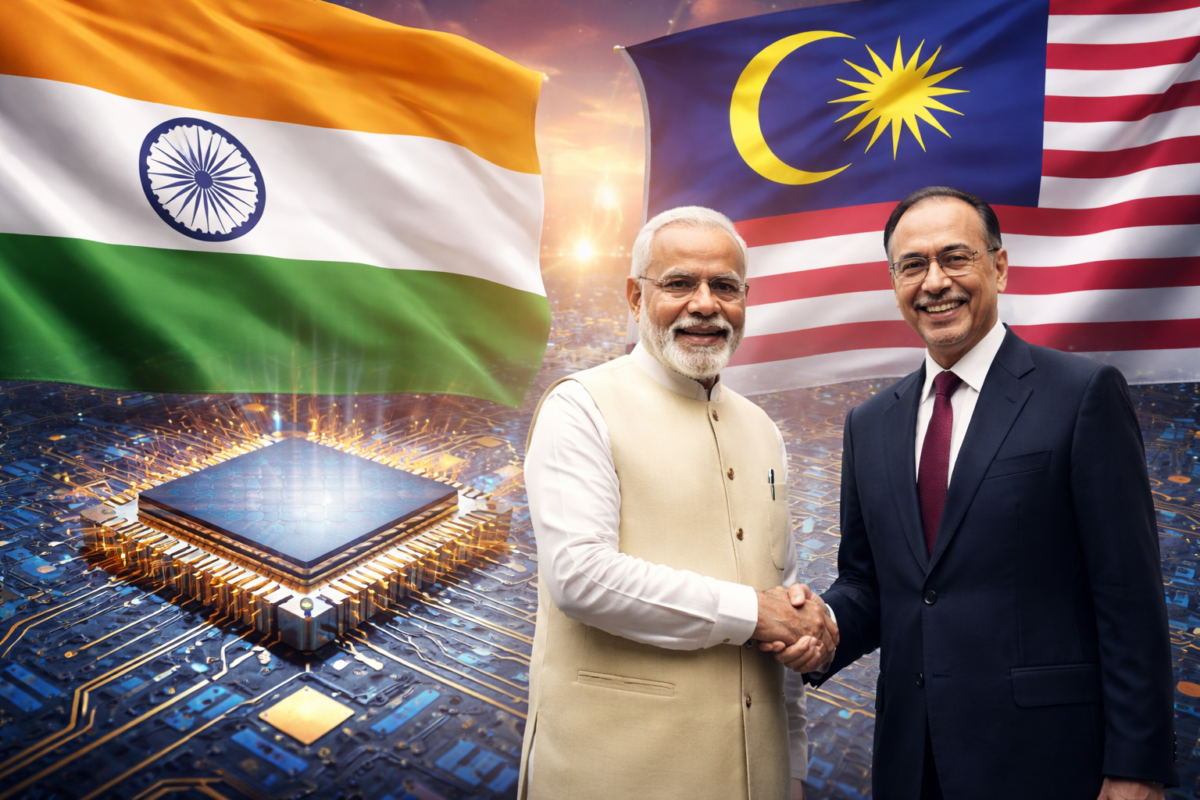
India and Malaysia deepen semiconductor cooperation during PM Modi’s visit, aiming to boost chip manufacturing, technology collaboration, and resilient global supply chains. India and Malaysia have taken a decisive step toward strengthening their technological partnership, with semiconductors emerging as a key focus area. During Prime Minister Narendra Modi’s official visit to Malaysia, both nations pledged to expand cooperation across the semiconductor value chain. This move reflects a shared vision to boost innovation, secure supply chains, and position themselves as important players in the global chip ecosystem.
As semiconductors become central to economic growth, national security, and digital transformation, this partnership signals a strategic alignment between two fast-growing economies in Asia.
A New Chapter in India–Malaysia Relations
The visit underscored the growing depth of bilateral ties between India and Malaysia. Leaders from both sides held extensive discussions on trade, technology, digital infrastructure, and manufacturing. Several agreements and cooperation frameworks were finalized, reinforcing the commitment to long-term collaboration.
Semiconductor cooperation stood out as a priority area, reflecting the increasing importance of advanced manufacturing and technology-driven growth. Both governments highlighted the need to move beyond traditional trade and focus on future-ready industries that can generate high-value jobs and innovation.
Table of Contents
Why Semiconductors Are a Strategic Priority
Semiconductors are the backbone of modern technology. They power smartphones, electric vehicles, data centers, medical devices, and defence systems. Global disruptions over the past few years have exposed vulnerabilities in semiconductor supply chains, prompting countries to seek diversified and reliable partnerships.
India is investing heavily in building a domestic semiconductor ecosystem, supported by policy incentives and private sector participation. Malaysia, with its long-established semiconductor industry, brings experience, infrastructure, and global integration. Together, the two countries aim to reduce supply risks and strengthen regional manufacturing capabilities.
Complementary Strengths Driving Collaboration
The partnership benefits from the complementary strengths of both nations. India has emerged as a global hub for chip design, software development, and engineering talent. Its large workforce and expanding electronics market make it an attractive destination for semiconductor investments.
Malaysia, meanwhile, plays a critical role in the global semiconductor supply chain, particularly in assembly, testing, and packaging. Decades of expertise and a strong industrial base allow Malaysia to support high-volume manufacturing and advanced processes. Collaboration with India opens doors for joint innovation and expansion into higher-value segments of the industry.
Multi-Level Cooperation Framework
The semiconductor partnership is expected to operate on multiple levels. Government-to-government coordination will provide policy support, while industry partnerships will drive investment and execution. Academic and research collaborations are also likely to play a role in skill development and innovation.
Read Also – Ladakh Crisis 2020: Army Chief’s Revelations Uncovered
Areas of cooperation may include setting up fabrication facilities, joint research centers, workforce training programs, and technology exchanges. This integrated approach aims to create a resilient semiconductor ecosystem spanning design, manufacturing, and packaging.
Economic Growth and Trade Opportunities
Stronger semiconductor ties are expected to deliver significant economic benefits for both countries. Increased investment in advanced manufacturing can create high-skilled jobs and stimulate local industries. Knowledge sharing between Indian and Malaysian firms can accelerate innovation and improve global competitiveness.
Bilateral trade is also set to benefit from this collaboration. As semiconductor-related manufacturing and exports grow, both countries can enhance their positions in regional and global markets. The partnership aligns with broader efforts to boost trade volumes and strengthen economic integration in Asia.
Strengthening Regional Supply Chains
Beyond bilateral gains, the India–Malaysia semiconductor partnership has wider regional implications. Many global companies are seeking to diversify production and reduce reliance on concentrated manufacturing hubs. By working together, India and Malaysia can offer an alternative, stable, and scalable supply chain solution.
This collaboration supports regional goals of technological resilience and sustainable growth. It also reinforces the role of both nations in shaping the future of the semiconductor industry in the Indo-Pacific region.
Future Outlook
The commitment made during Prime Minister Modi’s visit lays the foundation for long-term cooperation in one of the world’s most critical industries. As global demand for semiconductors continues to rise, India and Malaysia are well-positioned to capitalize on emerging opportunities through joint efforts.
With sustained policy support, industry participation, and innovation-driven strategies, this partnership can transform bilateral relations and contribute meaningfully to the global semiconductor landscape.
Conclusion
India and Malaysia’s decision to deepen semiconductor cooperation reflects a forward-looking approach to economic and technological growth. By leveraging their respective strengths, both countries are building a strategic alliance that supports innovation, supply chain security, and industrial development. This collaboration not only strengthens bilateral ties but also positions India and Malaysia as key contributors to the future of global semiconductor manufacturing.






[…] Read Also – India–Malaysia Semiconductor Partnership During PM Modi […]