

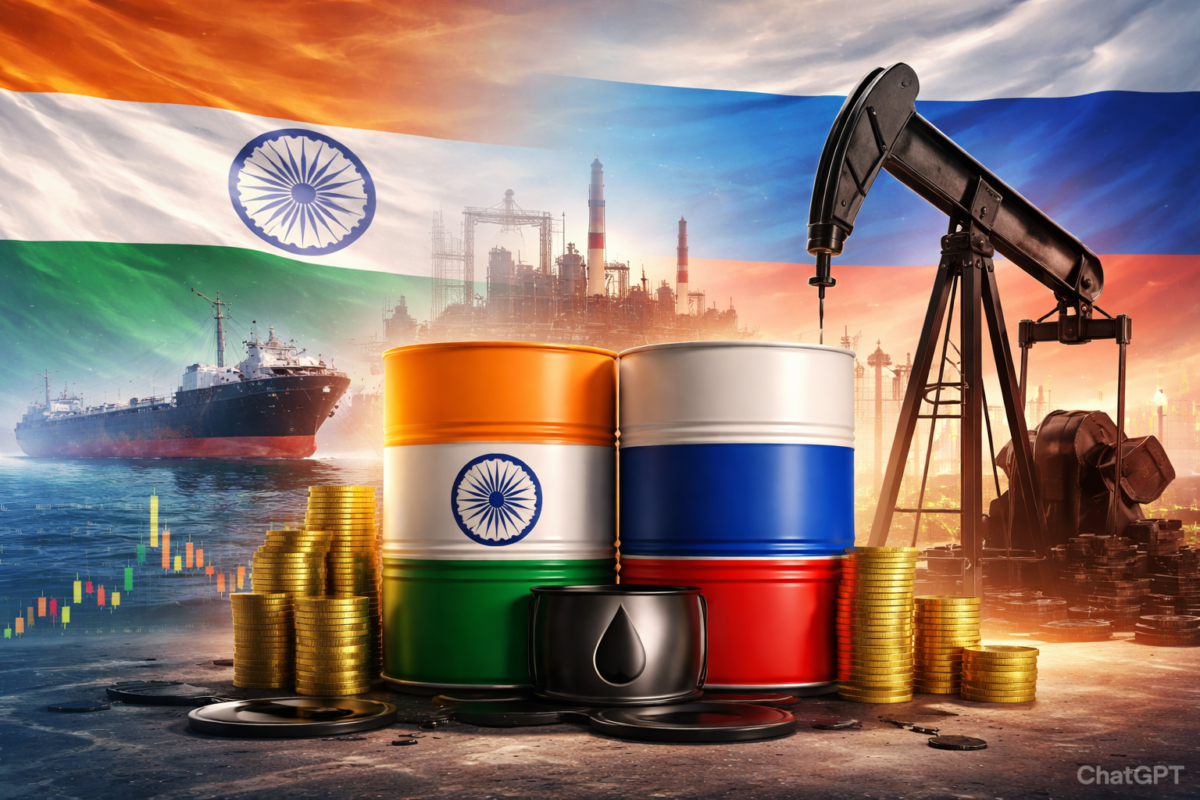
Russia dismisses claims that India has changed its Russian oil import policy following US trade talks. Explore what this means for India-Russia relations, global energy markets, and geopolitical strategy. A fresh diplomatic exchange has brought global attention back to India’s energy strategy. Recently, Russia strongly dismissed claims that India has altered its approach to purchasing Russian crude oil following trade discussions with the United States.
The issue highlights not only the complexity of global energy politics but also India’s firm stance on strategic autonomy. Here’s a detailed look at what’s happening and why it matters for global markets.
🔍 India-Russia – Background: Energy, Trade, and Diplomatic Messaging
Energy trade has become deeply intertwined with geopolitics. Recent trade negotiations between India and the United States reportedly included discussions surrounding oil imports. Following a diplomatic conversation between the two nations’ leaders, certain tariffs were adjusted, and some observers interpreted this as a sign that India might scale back its Russian oil purchases.
However, that interpretation has been publicly challenged.
Officials in Moscow made it clear that they see no indication of a shift in India’s oil procurement strategy. According to Russian authorities, there is no formal confirmation or policy change from New Delhi that suggests India will stop buying Russian crude.
This difference in narratives has sparked renewed debate about the direction of India’s energy policy.
Russia’s Response: No Evidence of Change
Russia’s position is straightforward. Officials have emphasized that:
There is no official indication that India has altered its stance.
Energy trade between the two countries remains mutually beneficial.
Sovereign nations have the right to determine their own economic and energy policies without external pressure.
From Moscow’s perspective, the India–Russia oil relationship has contributed to stabilizing global energy flows during periods of volatility. Russian representatives have also underscored that attempts to influence sovereign decisions through diplomatic messaging or economic pressure are counterproductive.
The response signals Moscow’s intention to maintain strong bilateral energy ties.
India-Russia – India’s Strategic Autonomy in Focus
India has long followed a foreign policy approach centered on strategic autonomy. This means that energy and trade decisions are guided primarily by national interests, economic needs, and long-term stability rather than external demands.
As one of the world’s fastest-growing major economies, India relies heavily on imported crude oil to meet its domestic energy requirements. Affordable and reliable energy supplies are essential for sustaining industrial growth, transportation networks, and household consumption.
Russian crude has often been competitively priced and readily available, making it an attractive option within India’s diversified energy portfolio.
Importantly, India has not officially confirmed any agreement to halt Russian oil imports. The absence of formal policy statements suggests that speculation about a dramatic shift may be premature.
Table of Contents
India-Russia – Conflicting Narratives: Interpretation vs. Policy
The situation underscores how diplomatic statements can sometimes be interpreted differently by various stakeholders.
On one side, trade negotiations and tariff adjustments are seen as part of broader economic cooperation. On the other, they are interpreted as signals of strategic alignment or policy change.
However, energy procurement decisions typically involve long-term contracts, supply chain logistics, refinery configurations, and pricing considerations. These structural factors are not easily altered by short-term diplomatic developments.
Read Also – China Expands Nuclear Arsenal Near Arunachal Pradesh
India’s energy policy appears to remain pragmatic, focusing on supply security, price stability, and diversification.
India-Russia – Why This Matters for Global Energy Markets
The India–Russia oil relationship is significant for several reasons:
1️⃣ Market Stability
India is one of the world’s largest oil importers. Any major shift in its sourcing strategy could impact global supply-demand dynamics. Continued imports from Russia contribute to balancing global crude flows and mitigating sudden price spikes.
2️⃣ Energy Diversification
India does not rely on a single supplier. Instead, it sources oil from multiple regions, including the Middle East, Africa, and Russia. This diversification reduces vulnerability to regional disruptions and enhances bargaining power.
3️⃣ Geopolitical Balance
India maintains diplomatic and economic ties with a wide range of global powers. Its energy strategy reflects a careful balancing act—engaging with Western economies while preserving long-standing partnerships elsewhere.
This approach enables India to protect its economic interests while navigating a complex global landscape.
India-Russia – Economic Implications for India
For India, energy affordability directly influences inflation, manufacturing costs, and overall economic growth. Lower crude prices can help manage fuel costs domestically, which in turn affects transportation, agriculture, and consumer goods pricing.
Any abrupt disruption in supply could have ripple effects across sectors. Therefore, maintaining multiple supply channels is a logical economic strategy rather than a political statement.
India’s approach appears rooted in economic calculation rather than alignment with any particular geopolitical bloc.
India-Russia – What to Watch Moving Forward
Several factors could shape developments in the coming months:
Global oil prices: Market fluctuations may influence sourcing decisions.
Trade negotiations: Future agreements could impact tariff structures and economic cooperation.
Energy transition goals: India’s investments in renewable energy may gradually alter its long-term fossil fuel dependency.
However, in the short term, there is no confirmed evidence of a fundamental shift in India’s oil import policy.
🧠 Final Thoughts
The recent diplomatic exchange illustrates how energy, trade, and geopolitics are deeply interconnected. While some narratives suggest India may be stepping away from Russian oil, official positions from Moscow indicate otherwise.
Ultimately, India’s energy decisions are guided by national priorities—ensuring affordability, security, and stability. As global dynamics continue to evolve, energy diplomacy will remain a key arena where economic interests and geopolitical strategies intersect.
For now, the message is clear: despite speculation, India’s oil procurement strategy appears steady, pragmatic, and aligned with its long-term national interests.





[…] Read Also – India-Russia Relations: Russia Denies Shift in Oil Imports […]