
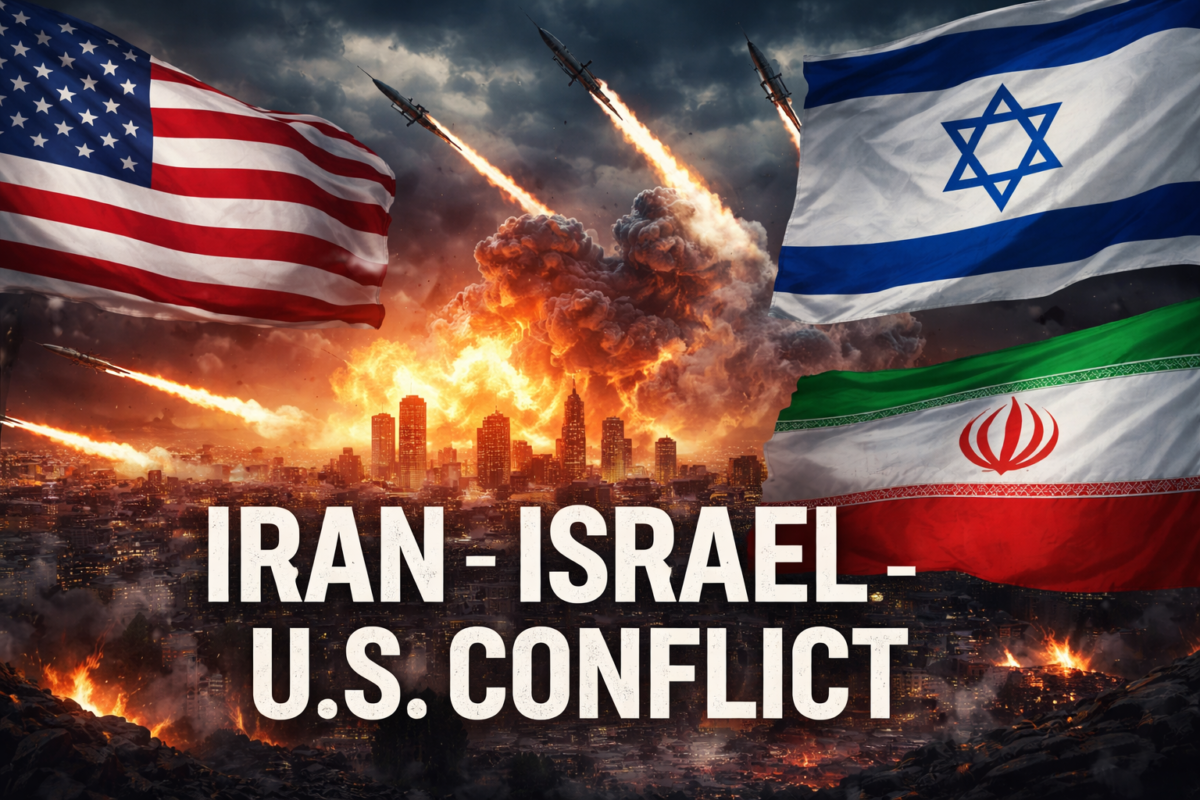
A detailed analysis of the rising tensions between Iran, Israel, and the United States after the February 28, 2026, strikes. Learn what triggered the conflict, regional reactions, and its potential global consequences. The geopolitical situation in West Asia took a dramatic turn on February 28, 2026, after coordinated military strikes linked to the United States and Israel targeted sites inside Iran. The operation marked one of the most serious escalations in regional tensions in recent years and has sparked global concern about the possibility of a broader conflict.
This article explains the background of the strikes, the reactions from involved countries, and what the developments could mean for the stability of the region and the world.
Iran-Israel, U.S. Background: Rising Tensions Before the Strikes
For months leading up to the incident, tensions in West Asia had been steadily increasing. Security analysts had warned about growing friction involving missile development, military alliances, and influence across neighboring countries. Concerns over regional security arrangements and military activities had already created an environment where even a small incident could trigger a major escalation.
Officials from multiple countries had repeatedly voiced concerns about potential threats, especially related to missile systems and military infrastructure. As diplomatic discussions struggled to produce progress, military preparedness across the region continued to intensify.
By late February 2026, intelligence assessments reportedly suggested the possibility of imminent confrontation. This set the stage for what would soon become a major military operation.
The Coordinated Military Operation
Early in the morning on February 28, reports emerged of explosions in several Iranian locations. Air and missile strikes targeted military installations and strategic infrastructure believed to be connected to defense operations and weapons systems.
The operation appeared to be extensive rather than limited to a single strike. Multiple regions were affected, indicating a planned and coordinated approach designed to weaken critical capabilities and disrupt military operations.
Officials associated with the operation described the action as necessary to address perceived threats and prevent future attacks. According to statements released after the strikes, the objective was both strategic and deterrent in nature — aiming to send a strong signal while reducing the potential for further escalation from opposing forces.
Strategic Justifications from Key Players The U.S. Perspective
American leadership framed the operation as a defensive action intended to protect allies and maintain regional stability. Officials emphasized that preventing the expansion of advanced missile capabilities and safeguarding international interests were central reasons behind the decision.
The government also highlighted its commitment to supporting partners in the region and countering activities it considers destabilizing.
Israel’s Position
Israeli authorities described the strikes as a pre-emptive measure designed to neutralize potential threats before they could materialize into direct attacks. Security leaders stressed that ensuring national safety requires decisive responses to intelligence indicating possible risks.
The country has long maintained a security doctrine that prioritizes early action against threats that could compromise its territorial safety or endanger its population.
Iran’s Reaction and Escalation Concerns
Following the strikes, Iranian officials strongly condemned the attacks and warned of retaliation. Military units were reportedly mobilized, and missile launches were reported toward strategic targets associated with the operation.
Statements from Iranian leadership emphasized that the country would respond firmly to what it considers an act of aggression. This reaction significantly raised fears of a wider confrontation that could involve additional countries or proxy forces in the region.
As tensions increased, emergency measures were implemented domestically, and defense systems were placed on high alert.
Regional Effects: Airspace Closures and Security Alerts
One of the immediate consequences of the conflict was disruption across the aviation sector in West Asia. Several countries temporarily closed their airspace to civilian flights due to safety concerns and the risk of misidentification during military operations.
Airlines quickly adjusted routes or suspended flights passing through the affected areas. These measures caused delays and cancellations for travelers moving between Asia, Europe, and the Middle East.
Read Also – India-Russia Relations: Russia Denies Shift in Oil Imports
Governments also issued travel advisories urging citizens in the region to remain cautious, avoid unnecessary movement, and follow official safety instructions.
Impact on Civilians and Communication Networks
As the situation unfolded, residents in several cities reported hearing explosions and witnessing heightened military activity. Civil defense systems were activated, and people were advised to stay indoors or seek shelter when necessary.
There were also reports of disruptions to internet and communication services in some locations, which limited the flow of information from affected areas. Despite these limitations, images and videos shared by residents indicated the intensity of the events taking place.
Public safety officials in multiple countries emphasized preparedness and emergency readiness as tensions continued to rise.
Global Diplomatic Reactions
The conflict quickly drew international attention. Governments around the world called for restraint and urged all parties to avoid actions that could escalate the situation further.
Diplomatic channels are reportedly being used to reduce tensions and encourage dialogue. Many global leaders fear that prolonged hostilities could destabilize not only West Asia but also global economic and security systems.
Energy markets, international trade routes, and regional alliances could all be affected if the confrontation continues to expand.
What Happens Next?
At present, the situation remains fluid and unpredictable. Military forces in the region remain on high alert, and further developments are possible as countries assess their next moves.
Analysts believe the coming days will be crucial in determining whether the conflict intensifies or shifts toward diplomatic engagement. The balance between military response and international mediation will likely shape the direction of events.
What is clear, however, is that the February 28 escalation has become a defining moment in modern West Asian geopolitics. The decisions made in the immediate aftermath could influence regional stability for years to come.