

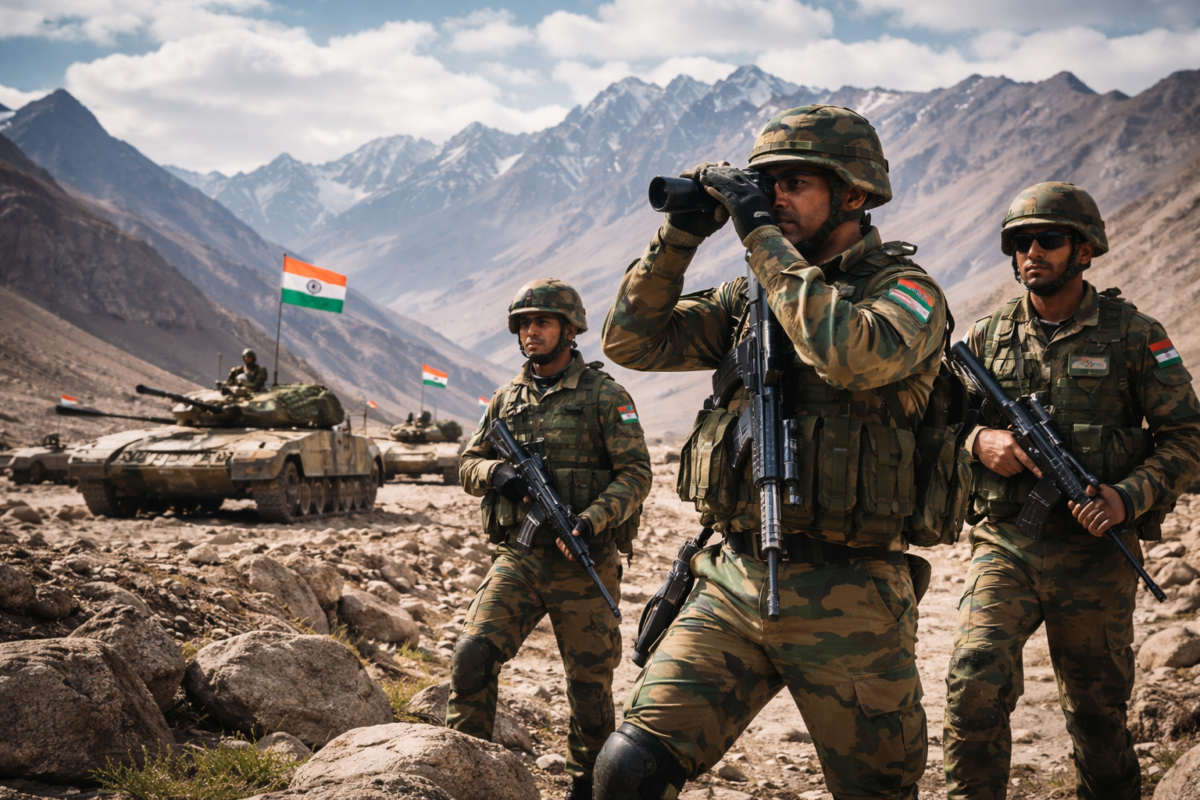
A behind-the-scenes look at the 2020 Ladakh Crisis standoff, revealing critical military decisions, leadership challenges, and lessons from the India–China crisis. The India–China military standoff in eastern Ladakh in 2020 remains one of the most defining security challenges India has faced in recent decades. While official statements at the time offered limited details, revelations from a senior military leader’s memoir provide a deeper understanding of how close the situation came to escalating into a full-scale conflict. The account highlights the pressure, uncertainty, and critical decision-making that unfolded behind closed doors during those tense months.
Why Eastern Ladakh Became a Flashpoint
Eastern Ladakh holds immense strategic value due to its location along the Line of Actual Control (LAC), the de-facto border between India and China. The harsh terrain, extreme weather, and high altitude make military operations particularly challenging. Despite several confidence-building agreements between the two nations, differences in border perception have repeatedly led to face-offs.
In mid-2020, tensions sharply escalated following aggressive troop movements and infrastructure activity. This culminated in a deadly clash in the Galwan Valley, fundamentally changing the security environment along the LAC and prompting both sides to deploy tens of thousands of troops backed by armor and artillery.
Table of Contents
A Critical Night in the High Himalayas
One of the most striking episodes described in the memoir centers on a late-night alert in August 2020. Indian military leadership received intelligence indicating that enemy tanks and infantry were advancing toward a strategically important mountain pass in the Kailash Range. The area offered commanding visibility and tactical advantage, making it vital for defensive positioning.
The situation was fluid and dangerous. Any misstep could have triggered a direct armed confrontation between two nuclear-armed nations. Field commanders urgently relayed developments to the highest levels of military leadership, seeking immediate guidance.
Searching for Clear Orders
As the situation evolved, the army chief reportedly reached out to multiple senior decision-makers within the national security establishment. The question was direct and pressing: how far should the military go in responding to the advancing forces?
However, the absence of immediate and unambiguous political instructions created a leadership vacuum at a critical moment. Existing protocols required political clearance before initiating offensive action, particularly in such a sensitive theatre. This delay highlighted the inherent tension between military urgency and political caution during crises.
Command Responsibility Under Pressure
Eventually, responsibility for the decision fell squarely on the shoulders of the army chief. With time running out, he was effectively told to take action based on his professional judgment. The memoir describes this moment as one of immense burden, where the consequences of every choice could reshape regional stability.
Instead of ordering direct engagement, the decision was made to deploy Indian tanks forward to dominant positions. The move was carefully calibrated—assertive enough to signal strength and readiness, yet restrained enough to avoid firing the first shot. The display of force proved effective, as the opposing armor halted its advance, preventing an immediate escalation.
Lessons in Civil–Military Coordination
Beyond battlefield maneuvers, the memoir sheds light on the complex relationship between political leadership and the armed forces. In democratic systems, civilian oversight is essential, but crises often demand rapid responses. The events of 2020 exposed the difficulty of aligning swift military action with cautious political decision-making.
The account raises important questions about whether existing crisis-management mechanisms are agile enough to deal with fast-moving threats. At the same time, it underscores the trust placed in senior military leaders to act responsibly when clear instructions are unavailable.
The Broader Impact of the Standoff
The Ladakh crisis did not end with a single night of tension. It led to prolonged deployments, infrastructure acceleration, and sustained diplomatic and military talks. Although disengagement occurred in some areas, friction along the LAC continues to influence India’s defence planning.
The memoir reflects on long-term concerns such as sustaining troops in extreme conditions, managing logistics at high altitude, and preparing for simultaneous diplomatic and military challenges. These insights underline how the 2020 standoff reshaped India’s strategic outlook toward its northern borders.
Why These Revelations Matter
Memoirs from senior military leaders are rare, especially those that discuss ongoing geopolitical rivalries. Such accounts provide context that official briefings often lack, helping citizens understand the realities of national security decision-making.
Read Also – What is UGC? UGC Bill 2026: All you need to know about
By documenting moments of uncertainty, responsibility, and restraint, this memoir contributes to a broader public conversation about transparency, preparedness, and leadership during crises. It also serves as a valuable resource for policymakers, analysts, and future military planners seeking lessons from one of the most serious border confrontations in recent history.
A Defining Chapter in Modern Security History
The 2020 Ladakh crisis stands as a reminder of how quickly regional tensions can escalate and how crucial timely decisions are in preventing conflict. The memoir’s insights reveal that restraint, strategic signaling, and professional judgment played a decisive role in averting disaster.
As discussions around border security and civil-military coordination continue, these behind-the-scenes perspectives ensure that the lessons of Ladakh remain relevant—not just for India, but for any nation navigating complex geopolitical fault lines.




[…] Read Also – Ladakh Crisis 2020: Army Chief’s Revelations Uncovered […]