
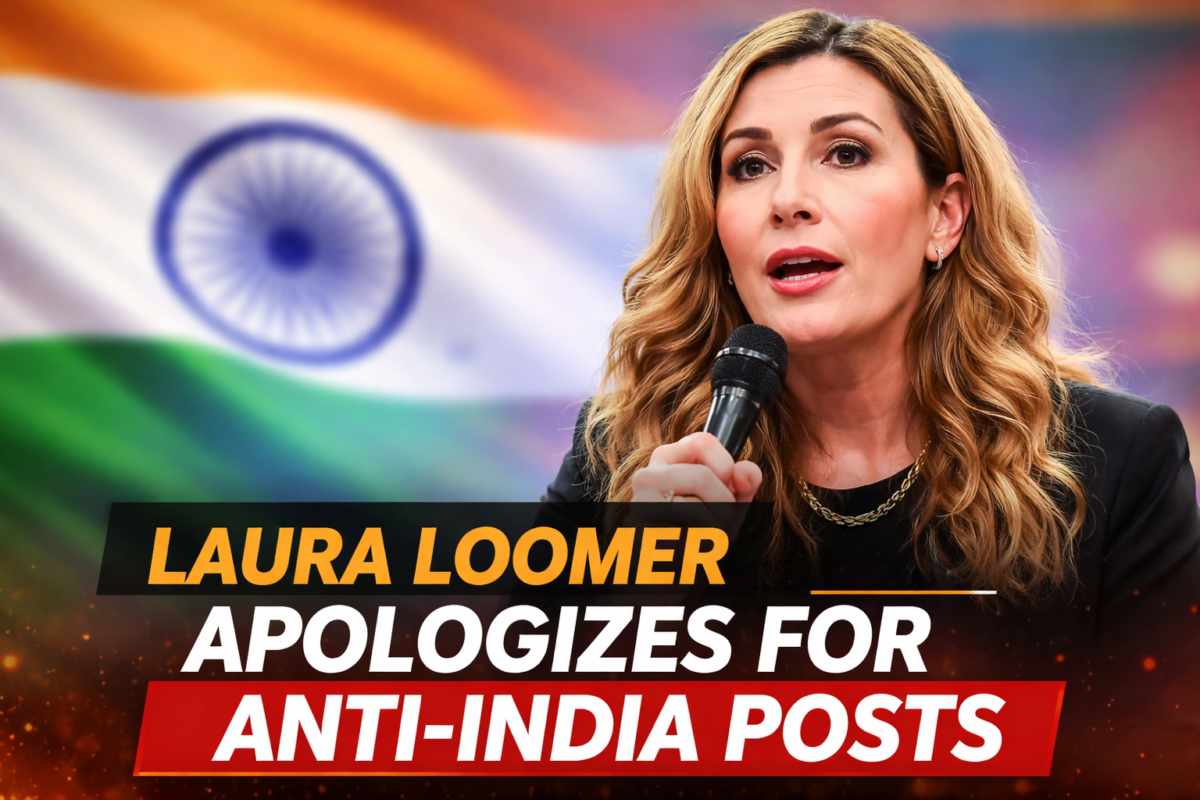
Trump supporter Laura Loomer apologised for past anti-India social media posts after backlash during her India visit. Read the full story and reactions. The recent apology by Laura Loomer has sparked widespread discussion across political and social media circles. Known for her outspoken views and controversial remarks, Loomer faced strong backlash after several past posts targeting India and Indians resurfaced online. The controversy intensified when she visited New Delhi to attend a major policy event, prompting renewed scrutiny of her earlier statements.
This article explains the background of the controversy, the apology issued by Loomer, and the broader implications of public figures’ social media conduct.
Who Is Laura Loomer?
Laura Loomer is an American political activist, commentator, and vocal supporter of Donald Trump. She has gained attention for her strong political opinions, controversial social media posts, and criticism of immigration policies such as the H-1B visa program.
Over the years, Loomer has been involved in multiple controversies related to inflammatory statements and conspiracy theories. Her outspoken style has often drawn criticism from political opponents and even some figures within her own ideological camp.
Her name once again entered the spotlight after older posts criticizing India and Indian immigrants resurfaced online, triggering outrage among social media users and members of the Indian diaspora.
Table of Contents
The Anti-India Posts That Sparked the Controversy
The controversy began when social media users rediscovered a series of tweets and posts in which Loomer allegedly used derogatory stereotypes about India and Indians. Some posts reportedly mocked Indian culture, questioned hygiene practices, and criticized Indian immigrants working in the United States.
Many critics described the remarks as offensive and discriminatory. The backlash intensified after Loomer announced that she would be visiting India to participate in a high-profile conference in New Delhi. Critics questioned why someone with such a history of remarks about India was being invited to speak at a public forum.
The resurfacing of these posts led to heated debates on social media platforms, with many calling for accountability and clarification from the activist.
Laura Loomer’s Public Apology
Facing growing criticism, Loomer addressed the issue publicly during an appearance at a major policy conclave in New Delhi. During the event, she acknowledged that some of her previous comments were inappropriate and expressed regret for statements that had offended members of the Indian community.
She reportedly stated that there were certain remarks she “should not have said,” referring to earlier posts that had triggered backlash online. At the same time, Loomer clarified that her criticism was primarily directed at immigration policies rather than the country of India itself.
Loomer also emphasized that she does not harbor hatred toward India or Hindus and claimed that she has previously spoken in support of Hindu communities facing persecution in different parts of the world.
Her apology drew attention across international media and political circles, especially because of her close association with supporters of former U.S. President Donald Trump.
Debate Over the H-1B Visa Program
One of the central themes behind Loomer’s earlier remarks relates to the H-1B visa program in the United States. The visa allows American companies to hire highly skilled foreign workers, many of whom come from India’s technology sector.
Loomer has been a strong critic of the program, arguing that it disadvantages American workers and contributes to job outsourcing. Even while apologizing for her earlier posts, she maintained her opposition to the H-1B system.
This stance aligns with the views of several nationalist political groups in the United States that advocate stricter immigration controls and prioritize domestic employment opportunities.
Reactions from Social Media and Public Figures
The apology did not completely end the controversy. Social media users and commentators remained divided over Loomer’s statements.
Some critics argued that deleting old posts or apologizing later does not erase the impact of earlier remarks. Others believed that acknowledging mistakes and apologizing publicly is a necessary step toward rebuilding trust with offended communities.
The debate also reignited broader discussions about how public figures should be held accountable for past online comments, particularly in a digital era where social media posts can resurface years after they were originally published.
Broader Implications for Public Discourse
The incident highlights the growing importance of responsible communication by public figures in the digital age. Statements made on social media can quickly spread across borders and influence public sentiment, diplomatic perceptions, and international relations.
For political activists and influencers, global audiences now scrutinize their words more closely than ever before. Controversial remarks that once might have remained within domestic political debates can rapidly escalate into international controversies.
Read Also – $1.3 Billion Oil Bribery Scandal Pushed a Nation Into Debt
The Loomer episode demonstrates how historical online posts can shape current public perception and affect the reception of political figures abroad.
Conclusion
The apology issued by Laura Loomer represents an effort to address the backlash surrounding her earlier anti-India social media posts. While she acknowledged that some of her remarks were inappropriate, the debate surrounding her comments continues across political and social media platforms.
The controversy serves as a reminder of the lasting impact of digital communication and the importance of thoughtful dialogue in a globally connected world. As political discourse becomes increasingly international, public figures are likely to face greater scrutiny for both their past and present statements.