

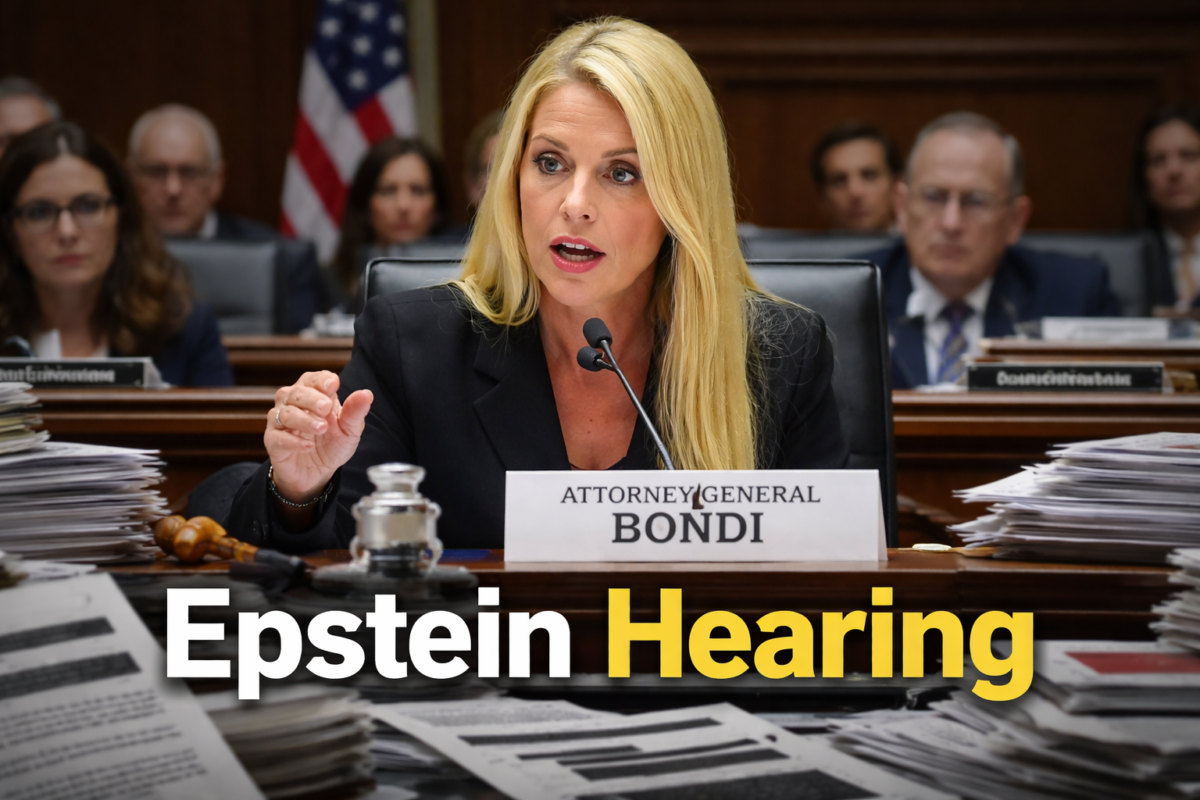
A detailed breakdown of Pam Bondi’s heated congressional testimony over the Epstein files. Explore key moments, redaction controversy, political clashes, and what it means for DOJ transparency and accountability in 2026. Attorney General Pam Bondi’s recent appearance before the U.S. House Judiciary Committee quickly turned into one of the most heated political hearings of 2026. What was expected to be a procedural review of the Department of Justice’s handling of sensitive case files instead became a tense exchange filled with sharp rhetoric, emotional appeals, and serious questions about transparency.
At the center of the controversy were millions of pages of documents connected to the late financier Jeffrey Epstein. Lawmakers from both parties demanded answers about how those files were released, why certain names were heavily redacted, and how victims’ privacy was protected. The hearing raised significant concerns about accountability, public trust, and the integrity of federal law enforcement.
What Triggered the Controversy?
The hearing focused on the Department of Justice’s decision to release a massive collection of documents related to the Epstein investigation. While transparency was the stated goal, the execution sparked backlash.
Several lawmakers argued that the redaction process appeared inconsistent. Some survivors’ names were reportedly visible in documents that were meant to shield victims’ identities, while other potentially important details were blacked out. Critics claimed that the department’s handling of the documents raised more questions than answers.
Adding emotional weight to the proceedings, survivors of Epstein’s crimes were present in the hearing room. Their presence intensified the atmosphere and reminded lawmakers of the human impact behind the legal debate.
Table of Contents
Pam Bondi – Heated Exchanges Dominate the Hearing
The tone of the session quickly escalated. Pam Bondi faced tough questioning about whether the department had failed victims by not adequately protecting their identities. When asked directly if Pam Bondi would apologize to those affected, she declined to issue a straightforward apology, instead defending the department’s overall process.
The exchanges became increasingly combative. At several points, Pam Bondi criticized lawmakers’ questioning styles and accused some members of engaging in political theater. Lawmakers, in turn, accused the department of evading responsibility.
The partisan divide was evident throughout the hearing. Democrats pressed for accountability and transparency, while some Republicans defended Pam Bondi’s record and questioned whether the criticism was politically motivated. The hearing ultimately became a broader debate over the credibility and independence of the Justice Department.
Redactions Under the Microscope
One of the most contentious issues was the department’s redaction process. Lawmakers questioned why certain names were withheld while others were exposed. Critics argued that redactions appeared selective, potentially shielding powerful individuals while failing to protect victims fully.
Bondi responded by emphasizing the complexity of reviewing millions of pages of records. She noted that large-scale document releases involve logistical challenges and that the department had worked under strict timelines. She also stated that corrections would be made if improper disclosures were identified.
However, for many observers, procedural explanations did little to calm concerns. The inconsistency in the redaction process became symbolic of a deeper issue: whether justice was being applied equally and transparently.
Accountability and Ongoing Investigations
Beyond the technical issues of document handling, lawmakers raised questions about whether all individuals connected to Epstein’s network had been fully investigated. Some suggested that high-profile figures may not have been thoroughly examined.
Pam Bondi declined to discuss specifics of ongoing investigations, citing legal limitations. While this response is standard practice in active cases, it left lawmakers frustrated and fueled speculation about whether accountability would be pursued aggressively.
Read Also – Was Kurt Cobain Murdered? New Claims Reignite Death Mystery
The hearing highlighted a persistent challenge in high-profile investigations: balancing legal confidentiality with public demands for transparency. When information is withheld, even for legitimate reasons, public trust can erode.
Impact on Public Trust in the DOJ
Although the focus was on the Epstein files, the broader implications extend to public confidence in the Department of Justice. The hearing underscored concerns about politicization, consistency, and fairness in federal law enforcement.
Supporters argued that Bondi’s department has prioritized law and order and should not be judged solely on one controversial document release. Critics countered that transparency and victim protection are fundamental responsibilities that cannot be compromised.
The highly public nature of the hearing ensured that the debate would extend beyond Capitol Hill. Media coverage and public commentary have amplified the discussion about whether the justice system is equipped to handle cases involving powerful individuals without bias.
What Happens Next?
The aftermath of the hearing leaves several open questions. Will additional documents be reviewed or re-released with corrected redactions? Will congressional oversight intensify? And perhaps most importantly, will victims feel that their voices were heard?
The controversy surrounding the file release underscores the delicate balance between transparency and privacy. In cases involving sensitive allegations and influential figures, the margin for error is slim.
As investigations continue and political scrutiny remains high, the Justice Department faces mounting pressure to demonstrate fairness, competence, and independence. For many Americans, the central issue is not partisan politics but confidence in a justice system that treats every individual equally.
The hearing may be over, but the broader conversation about accountability, transparency, and justice is far from finished.






[…] Read Also – Pam Bondi Congressional Hearing Explained Epstein Files […]