

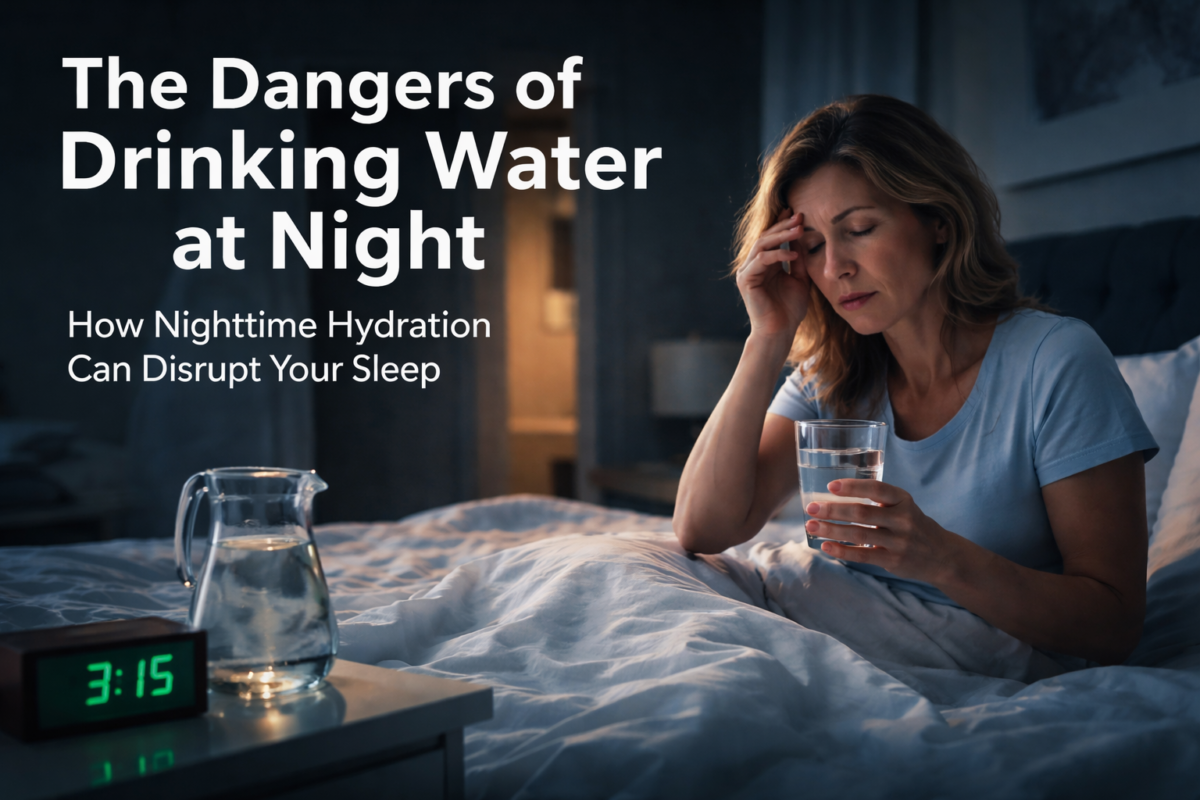
Learn the risks of drinking water at night, including sleep disruption and health effects. Discover smart hydration tips for better sleep and wellness. Water is the foundation of good health. It supports digestion, regulates body temperature, and helps flush toxins from the body. While staying hydrated is essential, the timing of your water intake plays a crucial role in how your body functions—especially at night.
Drinking water right before bedtime may seem harmless, but it can quietly disrupt your sleep and impact your overall well-being. Understanding these effects can help you build healthier hydration habits.
Why Risks of Drinking Water at Night
Your body follows a natural sleep cycle designed to restore energy and repair cells. When this cycle is interrupted, it can lead to both short-term discomfort and long-term health concerns. Consuming too much water at night often leads to frequent awakenings, which can prevent deep, restorative sleep.
- Interrupted Sleep Patterns
One of the most immediate effects of drinking water late at night is disrupted sleep. When your bladder fills during sleep, it signals your brain to wake you up.
Table of Contents
Frequent interruptions can:
Reduce sleep quality
Cause morning fatigue
Affect daily productivity
Over time, even small disruptions can accumulate and negatively impact your physical and mental performance.
- Increased Risk of Sleep Deprivation
Waking up multiple times during the night can prevent your body from entering deeper stages of sleep. These stages are essential for memory consolidation, muscle repair, and hormone regulation.
Lack of proper sleep may result in:
Reduced focus and concentration
Mood fluctuations
Lower immunity
Increased stress levels
Consistently poor sleep can also contribute to more serious health concerns if not addressed.
- Frequent Nighttime Urination
Drinking water before bed increases urine production, which often leads to repeated trips to the bathroom during the night. This condition becomes more noticeable with age or in individuals with certain health conditions.
Beyond sleep disruption, frequent nighttime movement can also increase the risk of accidents, especially in low-light environments.
- Strain on Cardiovascular Health
Sleep plays a vital role in maintaining heart health. When your sleep cycle is repeatedly interrupted, it can put additional stress on the body.
Poor sleep has been associated with:
Elevated blood pressure
Increased heart strain
Higher risk of long-term cardiovascular issues
Read Also – New COVID Variant Cicada BA.3.2 Latest Updates 2026
Maintaining uninterrupted sleep is an important part of protecting your heart.
- Risk of Overhydration
While uncommon, consuming excessive amounts of water in a short time can dilute essential minerals in the body. This condition, often referred to as overhydration, can disrupt the balance of electrolytes.
Possible symptoms include:
Headaches
Nausea
Confusion
Fatigue
This highlights the importance of drinking water in balanced amounts rather than all at once.
Are There Any Benefits?
Drinking a small amount of water before bed isn’t necessarily harmful. In fact, it can help prevent mild dehydration and maintain bodily functions during sleep.
However, the key is moderation. Large quantities right before bedtime are more likely to cause harm than benefit.
Smart Hydration Tips for Better Sleep
Maintaining proper hydration without disturbing your sleep is simple with a few mindful habits:
✔ Stay Hydrated During the Day
Drink water consistently throughout the day instead of consuming large amounts at night.
✔ Reduce Intake Before Bed
Limit water consumption at least 1–2 hours before sleeping.
✔ Take Small Sips if Needed
If you feel thirsty at night, take a few small sips rather than a full glass.
✔ Pay Attention to Your Body
Your body often signals when it needs hydration. Spreading your intake evenly helps avoid nighttime discomfort.
Final Thoughts
Hydration is essential, but timing makes all the difference. While drinking water is beneficial for overall health, excessive intake Risks of Drinking Water at night can disrupt your sleep and affect your well-being.
By making small adjustments—like drinking more water during the day and limiting intake before bed—you can enjoy both proper hydration and uninterrupted rest.
A balanced approach ensures your body gets what it needs without compromising your sleep quality.