

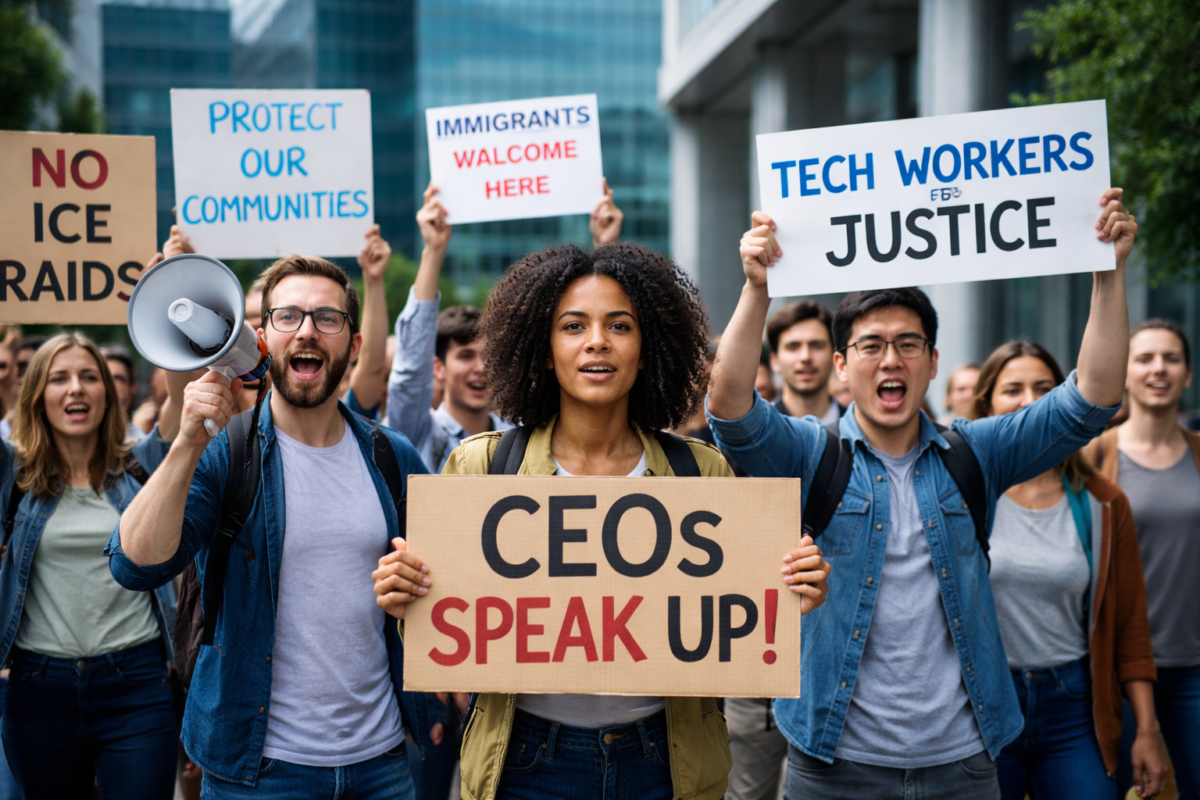
Tech employees across major companies are urging corporate leaders to respond to growing concerns over immigration enforcement, raising questions about ethics, influence, and accountability – In a powerful display of workplace activism, employees from some of the world’s most influential technology companies are calling on their chief executives to intervene in federal immigration enforcement actions. This growing movement highlights a shift in how modern employees view the role of corporate leadership—not just as business decision-makers, but as influential voices in national and humanitarian issues.
As immigration enforcement activities increase across several U.S. cities, tech workers are urging their companies to use political influence responsibly. Their demands reflect rising concerns about human rights, public safety, and the social impact of aggressive Immigration Enforcement strategies.
A Growing Movement Inside Big Tech
More than two hundred employees from major technology firms have come together to sign an open letter addressed to their CEOs. The message is clear: corporate leaders should actively engage with policymakers to address the consequences of intensified immigration raids.
These employees represent a wide range of roles, from engineers and designers to product managers and data analysts. While they do not speak for entire companies, their collective action has amplified attention on the issue and sparked broader conversations within the tech industry.
Table of Contents
Why Immigration Enforcement Has Sparked Concern
The employee response comes amid reports of intensified immigration enforcement operations in urban areas. These actions have led to heightened fear among immigrant communities and increased public protests. In some cases, enforcement efforts have escalated into confrontations that resulted in injuries and loss of life, further fueling national debate.
Tech workers argue that such outcomes undermine community trust and social stability. Many believe that companies benefiting from diverse, global talent have a responsibility to speak out when policies negatively affect immigrant populations.
What Employees Are Asking of CEOs
The open letter outlines specific actions that workers believe corporate leaders should take:
Direct Engagement With Policymakers
Employees want CEOs to personally reach out to top government officials to advocate for a pause or reconsideration of immigration raids. They argue that executives of major corporations often have access and influence that everyday citizens do not.
Reconsidering Business Relationships
Another key demand involves reviewing corporate contracts connected to federal enforcement agencies. Workers believe that continuing such partnerships may indirectly support practices they view as harmful or unethical.
Public Statements of Accountability
Beyond private discussions, employees are urging their leaders to publicly condemn violence and excessive force linked to immigration enforcement. According to the signatories, silence can be interpreted as complicity.
A Minority Voice With Major Visibility
While the number of employees involved represents a small fraction of the overall tech workforce, their impact should not be underestimated. Technology companies employ millions worldwide, but even a few hundred voices can shape public perception when they come from globally recognized brands.
Internal petitions and open letters often attract media attention, creating pressure on executives to respond—whether through statements, policy reviews, or internal discussions.
A History of Employee Activism in Tech
The tech sector has a long history of employee activism. In previous years, workers have protested company involvement in military projects, surveillance technologies, and controversial government initiatives. These movements have sometimes led to canceled contracts, revised policies, or public commitments to ethical standards.
This background has emboldened employees to believe their voices matter. Many view activism as an extension of professional responsibility rather than a distraction from work.
Read Also – Trump Bold Move on Student Visas
The CEO’s Dilemma: Leadership vs. Neutrality
For corporate leaders, responding to such demands is rarely simple. Taking a public stand on politically sensitive issues carries risks, including backlash from investors, customers, or government partners. At the same time, ignoring employee concerns can damage internal morale and company culture.
Executives must balance ethical leadership with fiduciary duties. In today’s climate, neutrality itself can be seen as a stance—one that may not satisfy an increasingly values-driven workforce.
Wider Implications Beyond the Tech Industry
This movement is part of a broader national conversation about immigration policy and enforcement tactics. Lawmakers, advocacy groups, and local governments have all voiced differing perspectives on how immigration laws should be implemented.
The involvement of corporate employees adds a new dimension to the debate. When workers inside powerful companies speak collectively, they highlight how government decisions ripple through workplaces, families, and communities.
The Future of Corporate Advocacy
The situation raises an important question: should corporations actively influence public policy beyond traditional lobbying for business interests? For many employees, the answer is yes—especially when human rights and community safety are at stake.
Whether or not CEOs act on these requests, one thing is clear: employee expectations are changing. Workers increasingly want their employers to align business success with ethical responsibility.
Final Thoughts
The call from tech employees to their CEOs represents more than a workplace petition—it reflects a shift in modern corporate culture. As companies grow larger and more influential, the pressure to engage responsibly with social issues will only increase.
In an interconnected world, corporate silence is no longer invisible. How leaders respond to these demands may shape not only public policy discussions but also the future relationship between companies and their workforce.