
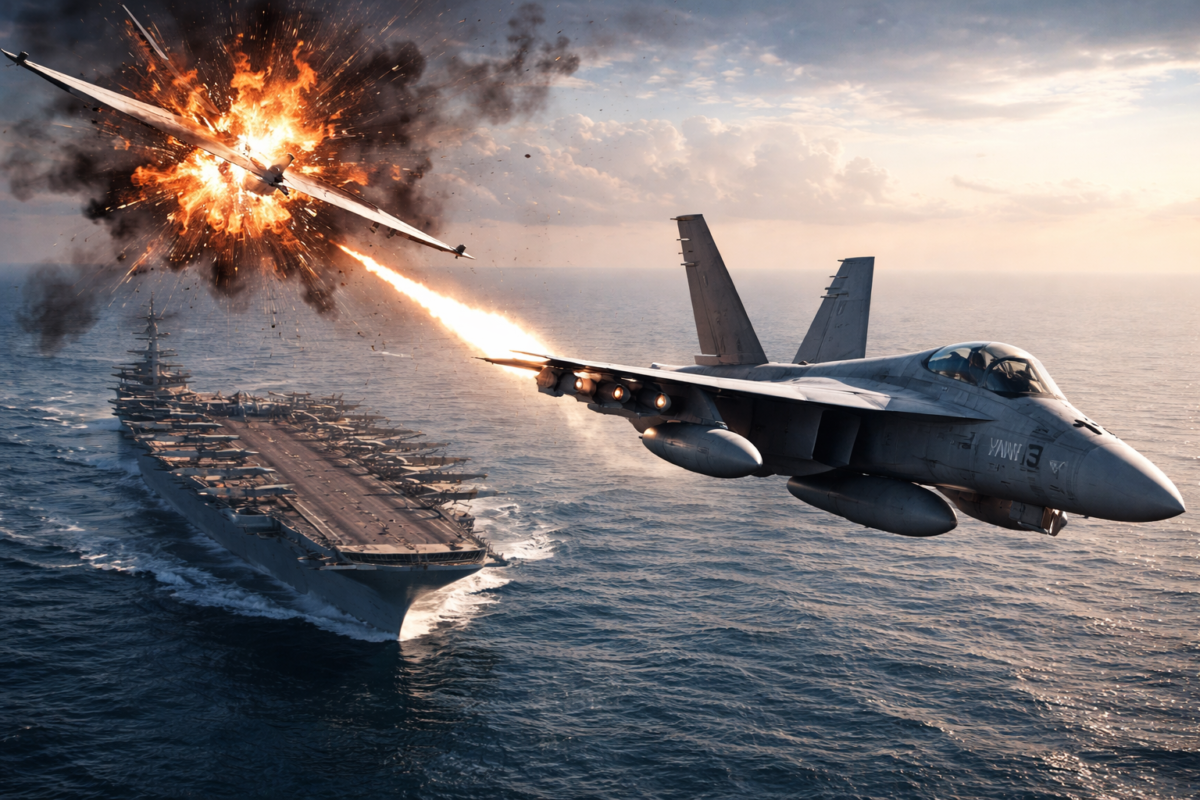
U.S. forces destroy an Iranian drone near an aircraft carrier in the Arabian Sea, raising tensions and security concerns in a strategic maritime region. The U.S. military recently shot down an Iranian drone that was flying close to a U.S. aircraft carrier in the Arabian Sea, triggering renewed attention on rising tensions between Washington and Tehran. The incident underscores the fragile security environment in one of the world’s most strategically important maritime regions and highlights the growing role of unmanned aerial vehicles in modern military confrontations.
This development has implications not only for U.S.–Iran relations but also for regional stability, global shipping routes, and international diplomacy.
What Happened in the Arabian Sea?
In early February 2026, U.S. naval forces detected an Iranian unmanned aerial vehicle approaching the aircraft carrier USS Abraham Lincoln while it was operating in the Arabian Sea. Military officials stated that the drone displayed aggressive behavior and continued its approach despite attempts by U.S. forces to redirect or warn it away.
To ensure the safety of personnel and naval assets, a U.S. fighter jet was dispatched and successfully shot down the drone before it could reach the carrier. No injuries or damage were reported following the incident, and operations continued without disruption.
The drone was later identified as a Shahed-139, a long-range unmanned aircraft capable of surveillance and potential offensive missions. Its proximity to a high-value military asset raised serious security concerns, prompting immediate defensive action.
Table of Contents
Why the Drone Shootdown Is Significant
- Escalating U.S.–Iran Tensions
The shootdown occurred at a time of heightened political and military strain between the United States and Iran. Ongoing disputes over Iran’s nuclear ambitions, regional influence, and military activities have kept relations tense. Incidents like this risk escalating confrontations beyond diplomatic channels.
- Strategic Importance of the Region
The Arabian Sea is a crucial maritime corridor connecting global trade routes and energy supplies. Any military incident in this area has the potential to affect international shipping, energy markets, and regional security. The presence of advanced military forces from multiple nations increases the risk of miscalculation.
- Military Rules of Engagement
The incident highlights how modern naval forces respond to unmanned threats. With drones increasingly used for intelligence gathering and military signaling, rapid decision-making becomes essential to prevent potential attacks or accidents.
What Led to the Confrontation?
Iran’s Drone Capabilities
Iran has invested heavily in its drone program over the past decade, developing a wide range of unmanned aircraft for reconnaissance, deterrence, and combat roles. These drones have been deployed across several regional conflicts, raising concerns among Western and regional powers.
The Shahed-139, in particular, is capable of long-endurance flights and may carry sensors or payloads that pose a threat to naval forces. Its approach toward a U.S. aircraft carrier would naturally be viewed as a serious security risk.
U.S. Military Presence
The United States has increased its naval and air presence in the Middle East in response to regional instability. Aircraft carriers, destroyers, and fighter jets are routinely deployed to deter hostile actions and protect international waterways.
Read Also – US–Cuba Oil Blockade Escalation Fuels Regional Tensions
This increased presence also coincides with diplomatic efforts aimed at managing tensions, creating a complex balance between military readiness and political negotiation.
Follow-Up Incidents Raise Further Concerns
Shortly after the drone was shot down, U.S. officials reported additional confrontations in nearby waters. Iranian naval units and drones were observed conducting close maneuvers near a U.S.-flagged commercial vessel in the Strait of Hormuz.
U.S. naval forces intervened by escorting the vessel and deploying air support to deter further interference. These incidents suggest a pattern of increased friction in key maritime chokepoints, where even minor encounters could escalate rapidly.
Official Reactions from Both Sides
U.S. officials described the drone shootdown as a defensive action taken to protect American forces and equipment. They emphasized that the United States remains committed to safeguarding its military personnel while supporting freedom of navigation in international waters.
Iranian statements offered a different narrative, with some officials claiming the drone was conducting routine operations and posed no threat. Others criticized the U.S. military presence in the region, framing the incident as an example of unnecessary escalation.
Despite the sharp rhetoric, both countries have continued to express conditional interest in diplomatic engagement, reflecting the dual approach of deterrence and dialogue.
What This Means Going Forward
The shootdown of the Iranian drone serves as a reminder of how quickly tensions can rise in contested regions. As unmanned systems become more common, encounters between rival forces are likely to increase, raising the stakes for misjudgment.
For global observers, the incident reinforces the importance of monitoring developments in Middle Eastern security, maritime defense strategies, and U.S.–Iran relations. Whether this event leads to renewed diplomatic efforts or further military posturing remains to be seen.
Conclusion
The destruction of an Iranian drone near a U.S. aircraft carrier in the Arabian Sea highlights the fragile balance between deterrence and diplomacy. While the incident ended without casualties or damage, it underscores the risks inherent in crowded and contested maritime environments. As tensions persist, the actions taken by both sides in the coming weeks will play a critical role in shaping regional stability and international security.