

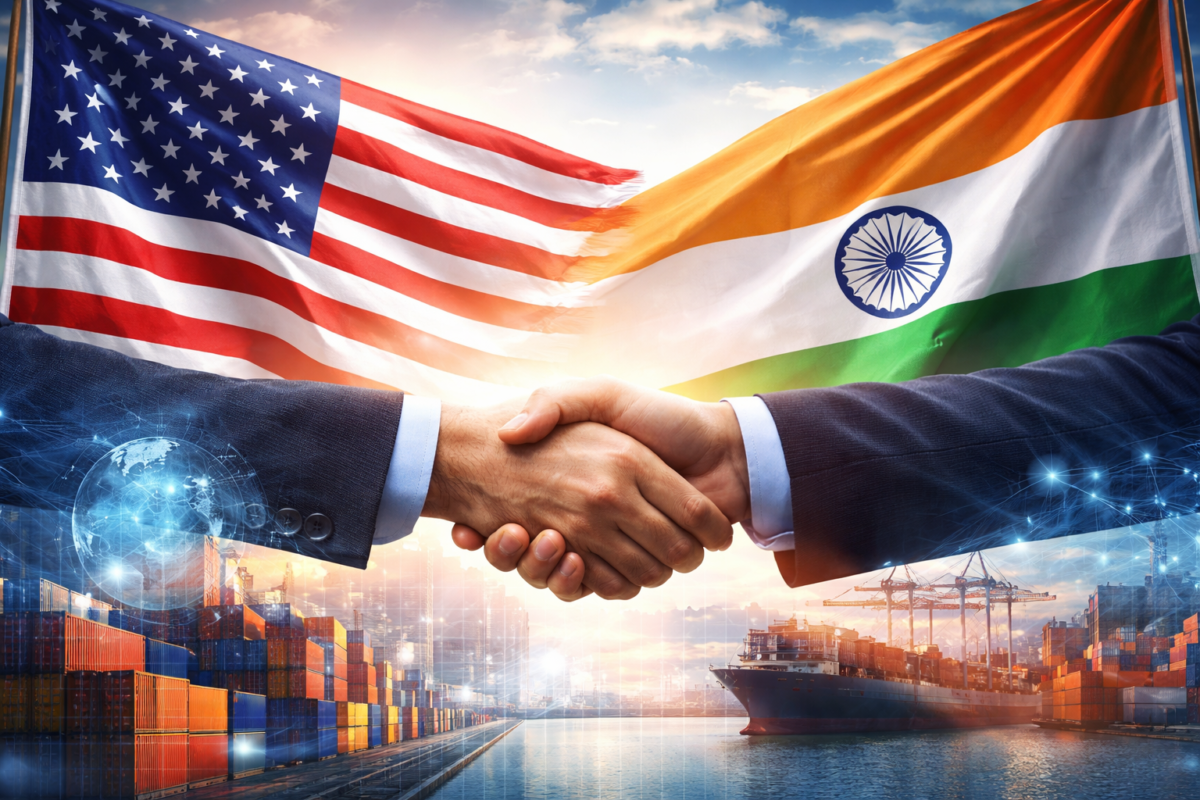
The United States says it will avoid repeating past trade mistakes made with China while strengthening economic ties. Discover what this strategy means for global trade, supply chains, and the future of US-India relations. The economic and strategic partnership between the United States and is entering a significant new phase. A senior US official recently indicated that Washington intends to approach its economic relationship with differently than it did with China two decades ago. The statement reflects a shift in global trade strategy and highlights how policymakers are learning from past economic decisions.
As continues to grow as one of the world’s most influential economies, the United States sees tremendous potential for cooperation. However, this relationship will likely be built on a more balanced framework that protects national interests while encouraging economic collaboration.
Learning From the US–China Economic Experience
For many years, the United States supported China’s integration into the global economy by expanding trade access, encouraging investment, and sharing technology. This approach helped China rapidly develop its manufacturing capabilities and expand its global economic influence.
Over time, China evolved into one of the world’s most powerful economic competitors. Many US policymakers now believe that earlier trade policies allowed China to gain a significant strategic advantage in industries such as manufacturing, electronics, and technology.
Because of this experience, US officials now say they intend to apply the lessons learned when building economic partnerships with other countries, including.
Table of Contents
A More Balanced Approach to US-India Trade
The United States has expressed strong interest in strengthening trade and investment ties with. However, policymakers emphasize that future agreements will be designed to ensure fairness and protect domestic economic priorities.
Instead of unrestricted market access, the US approach focuses on creating mutually beneficial trade arrangements. This includes ensuring that both countries gain economic advantages while maintaining safeguards for critical industries and technological sectors.
The new strategy also reflects a broader policy direction that prioritizes domestic jobs, economic security, and resilient supply chains.
’s Rising Importance in the Global Economy
’s growing influence in global markets has made it an increasingly important partner for the United States. The country has one of the fastest-growing major economies in the world, supported by a young workforce, expanding technology sector, and a large domestic consumer market.
Several factors contribute to India’s attractiveness as a global economic partner:
Rapid Economic Growth
India’s economy continues to expand steadily, attracting international investors and multinational corporations seeking new markets and production hubs.
Skilled Workforce
The country produces millions of skilled professionals each year, particularly in fields such as engineering, information technology, and digital services.
Expanding Technology Ecosystem
India has become a major global center for technology development, software services, and digital innovation.
Strategic Location
Located in the Indo-Pacific region, India plays a critical role in global trade routes and supply chain networks.
Supply Chain Shifts in a Changing Global Economy
In recent years, many companies have begun looking beyond China for manufacturing and supply chain opportunities. Rising costs, geopolitical tensions, and the desire for diversified supply networks have pushed businesses to explore alternative production hubs.
India has emerged as one of the most promising destinations for this shift. Global companies are increasingly considering India for manufacturing in sectors such as electronics, pharmaceuticals, automobiles, and renewable energy technology.
If this trend continues, India could become a key pillar in the restructuring of global supply chains.
Expanding Strategic Cooperation
The partnership between the United States and India extends beyond trade. Both countries are expanding collaboration in several strategic sectors that will shape the future global economy.
Technology Development
Joint initiatives in emerging technologies such as artificial intelligence, semiconductor manufacturing, and advanced telecommunications are becoming a key focus of cooperation.
Defense Collaboration
Defense partnerships between the two countries have grown significantly in recent years. Military cooperation, joint exercises, and technology sharing are strengthening security ties.
Read Also – Iran Israel U.S. Conflict 2026: What Happened, Key Events,
Innovation and Research
Academic institutions, startups, and technology companies from both countries are increasingly collaborating on research and innovation projects.
These efforts aim to build stronger economic and technological ecosystems while supporting long-term strategic interests.
Managing Competition While Strengthening Partnership
Although the United States sees India as a strategic partner, policymakers are also aware that global economic relationships can evolve over time. As a result, the new approach focuses on creating partnerships that balance cooperation with healthy competition.
This means ensuring transparency in trade policies, protecting sensitive technologies, and maintaining fair market access for businesses in both countries.
Such safeguards are designed to create sustainable long-term partnerships without repeating past economic challenges.
What This Means for the Future of Global Trade
The evolving relationship between the United States and India could have far-reaching effects on global trade patterns. As the two countries deepen economic cooperation, several important changes may occur.
First, multinational corporations may increasingly shift production and investment toward India. Second, the Indo-Pacific region could become a major center for global manufacturing and technological innovation. Finally, stronger US-India collaboration may contribute to more resilient and diversified supply chains worldwide.
Conclusion
The United States’ decision to take a more cautious and strategic approach toward its economic partnership with India reflects changing global trade dynamics. By learning from past experiences, policymakers aim to build a relationship that promotes growth while protecting national interests.
For India, this shift presents significant opportunities. As one of the fastest-growing economies and a key democratic partner in Asia, the country is well positioned to play a larger role in shaping the future global economic order.
If managed effectively, the evolving US-India partnership could become one of the most important economic relationships in the world over the coming decades.