

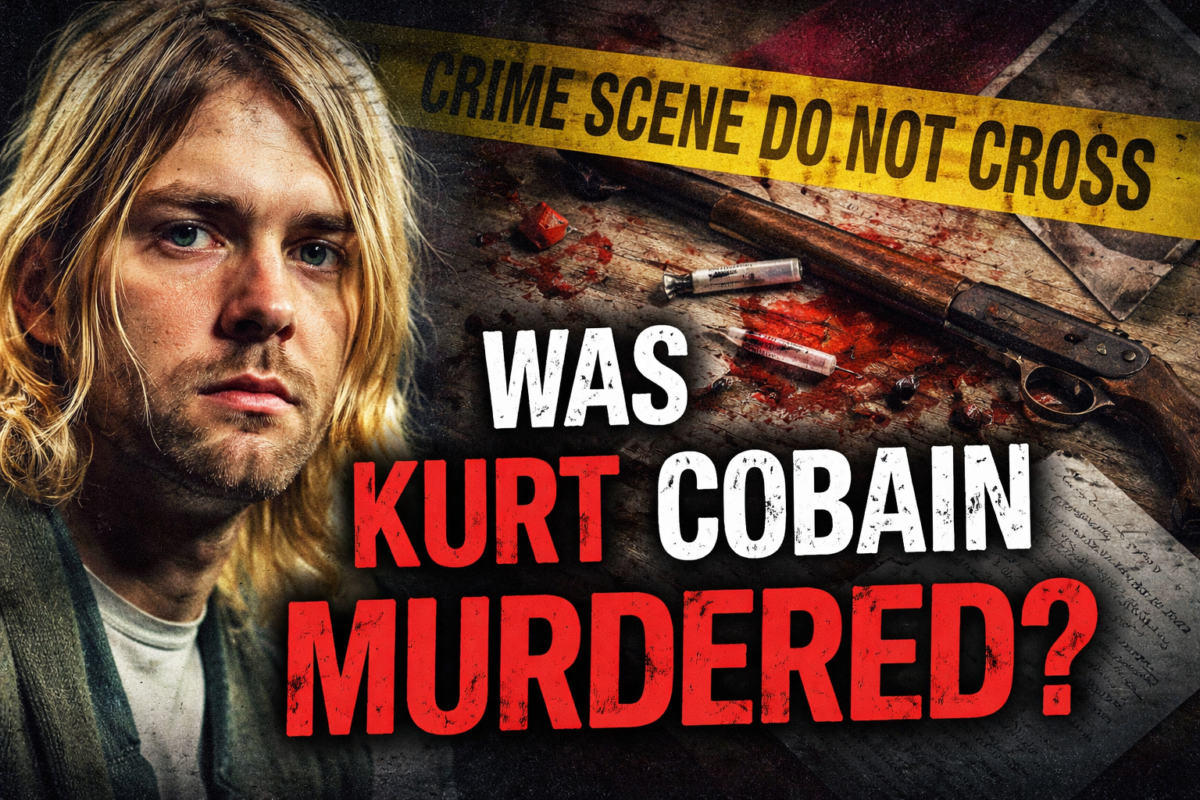
New claims challenge the official suicide ruling in Kurt Cobain’s 1994 death. Explore the evidence, controversy, and why the mystery still fuels debate today. Nearly three decades after the death of Nirvana frontman Kurt Cobain, fresh claims have reignited one of music history’s most controversial debates. While his death was officially ruled a suicide in 1994, new interpretations of old evidence are once again raising questions about whether the legendary musician may have been the victim of foul play.
The renewed discussion has sparked widespread interest among fans, researchers, and pop culture observers, reopening a case that many believed was long settled.
The Official Account of Kurt Cobain’s Death
Kurt Cobain was found dead in his Seattle home in early April 1994 at the age of 27. Authorities concluded that he died from a self-inflicted shotgun wound. A handwritten note, widely accepted as a suicide note, was discovered at the scene. Toxicology reports also indicated the presence of heroin in his system.
Law enforcement agencies and medical examiners have consistently upheld the suicide ruling over the years, stating that the physical evidence supports this conclusion. Despite ongoing public interest, the case has never been officially reopened.
Table of Contents
New Claims Challenge the Suicide Narrative
Recent independent research has challenged the longstanding official version of events, suggesting that Cobain may not have been capable of taking his own life in the manner described. According to these claims, Cobain may have been incapacitated before his death, raising the possibility that the scene was staged to resemble a suicide.
Some of the arguments put forward include:
High Levels of Drugs in His System: Critics argue that the amount of heroin found in Kurt Cobain’s body would have rendered him physically unable to handle a firearm.
Interpretation of Autopsy Details: Certain forensic observations, such as tissue damage and blood patterns, are interpreted by skeptics as inconsistent with a self-inflicted gunshot wound.
Placement of Evidence: Items such as the weapon, personal belongings, and written note are claimed by some to have been deliberately arranged to reinforce the suicide narrative.
Supporters of these theories believe these points justify a fresh investigation using modern forensic techniques.
Why Authorities Remain Unconvinced
Despite the renewed attention, officials have shown no indication of changing their stance. Medical experts have stated that individuals with long-term substance dependency can develop high tolerance levels, potentially explaining Cobain’s ability to act despite drug presence.
Investigators also maintain that the physical evidence at the scene aligns with suicide and that no verified new information has emerged that would legally justify reopening the case. From an official standpoint, speculation alone is not enough to overturn a concluded investigation.
A History of Conspiracy Theories
Speculation surrounding Kurt Cobain’s death is not new. Over the years, writers, private investigators, and filmmakers have explored alternative theories through books, documentaries, and interviews. These works have questioned details such as handwriting analysis, timelines, and personal relationships.
Such narratives have kept the mystery alive in popular culture, ensuring that Cobain’s death remains one of the most debated moments in rock history. While these interpretations vary in credibility, they continue to fuel public curiosity.
Why the Debate Still Matters
Kurt Cobain was more than a musician—he was a cultural symbol of a generation. His music gave voice to alienation, vulnerability, and resistance to fame. Because of this deep emotional connection, many fans struggle to accept a simple explanation for his death.
For some, questioning the circumstances is about seeking truth. For others, it reflects broader conversations around mental health, addiction, and the pressures placed on public figures. The persistence of this debate shows how deeply Cobain’s legacy continues to resonate.
Calls for Re-examination
Those advocating for a renewed investigation argue that:
Advances in forensic science could provide clearer answers today.
Conflicting interpretations of evidence deserve independent review.
Transparency could help bring closure to long-standing doubts among fans.
While these calls grow louder online, no official action has followed so far.
The Counterargument: Accepting the Findings
On the other side, experts and officials argue that reopening a case without concrete new evidence risks distorting facts and overshadowing important discussions about mental health. They emphasize that many aspects cited as suspicious can be reasonably explained within the existing investigation.
Read Also – Chappell Roan Leaves Major Talent Agency Over Ethical
From this perspective, continuing to challenge the ruling may unintentionally undermine awareness of suicide and addiction—issues that were openly present in Cobain’s life.
Conclusion: Mystery or Closure?
The question of whether Kurt Cobain died by suicide or was the victim of a staged crime remains unresolved in the public imagination. While official conclusions remain unchanged, renewed claims ensure that the discussion continues.
What is certain is that Cobain’s influence on music and culture remains timeless. As debates persist, his legacy endures—not only through his songs, but through the lasting impact of his life, struggles, and art.






[…] Read Also – Was Kurt Cobain Murdered? New Claims Reignite Death Mystery […]