

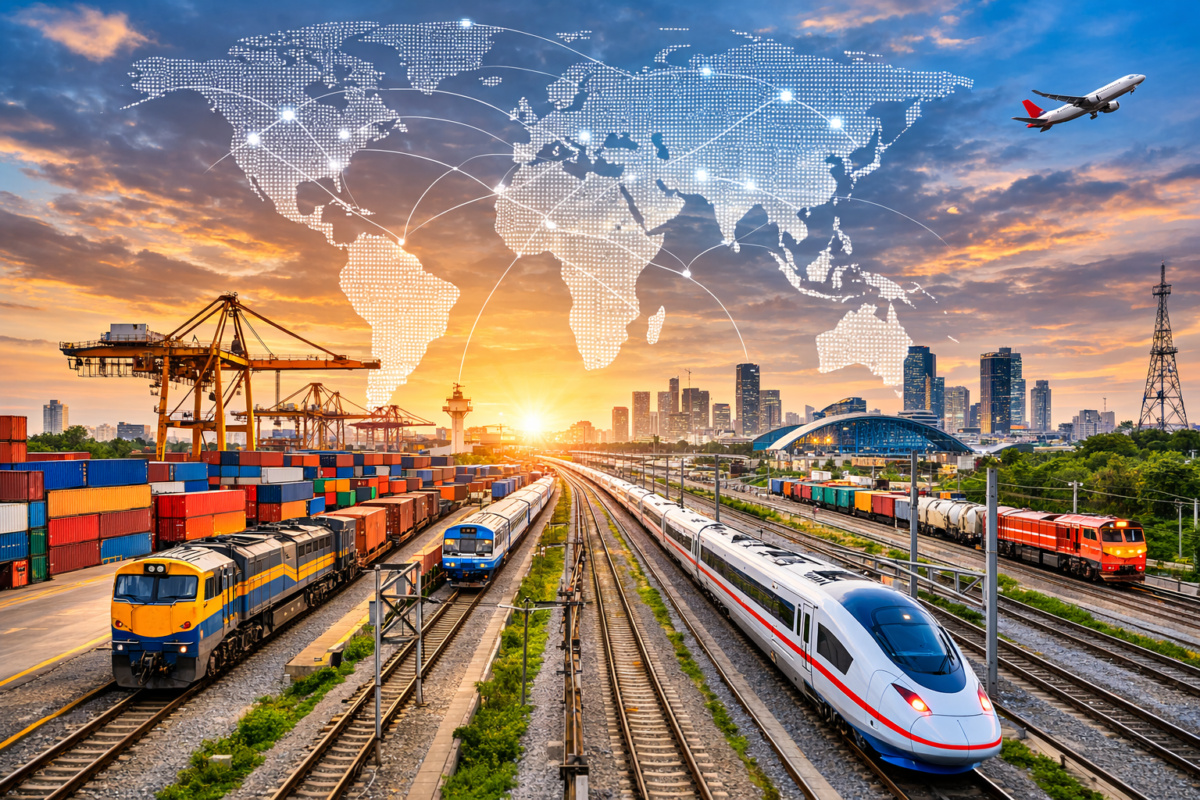
Discover the countries with the largest rail networks in the world. Explore how nations like the United States, China, India, and Russia built massive railway systems that drive transportation, trade, and economic growth. Railways are one of the most efficient transportation systems in the world. They play a crucial role in moving people, goods, and raw materials across vast distances. Many countries have invested heavily in building extensive rail networks that support economic growth, improve connectivity, and reduce transportation costs.
Some nations have developed massive railway systems that span thousands of kilometers, connecting cities, industries, and rural areas. These rail networks are vital for trade, logistics, and daily commuting. Let’s explore the countries that have built the largest rail networks in the world.
Why Rail Networks Are Important
Railways are a backbone of national transportation infrastructure. A strong rail network allows faster movement of goods, reduces dependence on road transport, and lowers fuel consumption. Rail transport is also considered more environmentally friendly because it produces fewer emissions compared to trucks and airplanes.
Countries with large geographical areas or strong industrial economies often rely heavily on railways for transporting freight and passengers. As urbanization increases, rail systems continue to expand and modernize.
Table of Contents
United States – The Largest Rail Networks in the World
The United States has the largest railway network globally, with more than 220,000 kilometers of track. The country’s rail system is primarily focused on freight transportation rather than passenger travel.
Railways in the United States play a key role in transporting commodities such as coal, grain, automobiles, and industrial products across long distances. The extensive rail infrastructure connects major ports, manufacturing centers, and agricultural regions, making it a critical part of the nation’s supply chain.
Freight trains in the United States are among the longest and heaviest in the world, allowing large quantities of goods to move efficiently across the country.
China – Rapid Growth in Railway Infrastructure
China has the second-largest railway network in the world and has expanded its rail infrastructure rapidly in recent decades. The country has invested heavily in modern rail technology, including high-speed trains.
China now operates the largest high-speed railway system globally, linking major cities with extremely fast trains that significantly reduce travel time. These high-speed routes connect economic hubs and densely populated regions, making travel faster and more convenient.
The expansion of railways has also supported China’s economic development by improving logistics and boosting trade.
Russia – Railways Across a Vast Landscape
Russia ranks among the top countries with the largest railway networks due to its enormous land area. Railways are essential for connecting cities and industries across the country’s vast territory.
One of the most famous rail routes in the world, the Trans-Siberian Railway, stretches thousands of kilometers and connects western Russia to the Far East. It is one of the longest railway lines ever built and serves as a major transport corridor.
Rail transport in Russia is crucial for moving natural resources such as coal, oil, and minerals from remote regions to industrial centers and ports.
India – One of the Busiest Rail Systems
India has one of the largest railway networks in the world and operates one of the busiest passenger rail systems. The railway network connects thousands of cities, towns, and villages across the country.
Millions of people depend on trains every day for commuting, long-distance travel, and transportation of goods. Indian Railways plays a vital role in the country’s economy by supporting trade, tourism, and industrial growth.
In recent years, India has focused on improving railway infrastructure through electrification, modernization of stations, and the introduction of high-speed rail projects.
Canada – A Strong Freight Railway Network
Canada also has a large railway system that plays an important role in transporting goods across the country’s vast landscape. Much of Canada’s rail network is designed for freight transportation rather than passenger travel.
Railways are heavily used to move natural resources such as timber, oil, minerals, and agricultural products. These rail routes connect inland industries to major ports, enabling efficient export of goods to global markets.
Because of the country’s large distances between cities, railways are essential for maintaining smooth supply chains.
Germany – A Key Rail Hub in Europe
Germany is known for having one of the most efficient railway systems in Europe. Its rail network supports both passenger travel and freight transport across the country and neighboring regions.
High-speed trains connect major cities quickly and comfortably, making rail travel a popular option for commuters and tourists. Germany’s central location in Europe also makes it an important transit hub for international rail transport.
Read Also – 6 Temples in India Where Men Are Restricted Traditions
The country’s well-developed infrastructure helps maintain punctuality, efficiency, and strong connectivity within Europe.
Australia – Railways Supporting Resource Industries
Australia has a large railway network that stretches across its vast continent. Much of the railway infrastructure is designed to transport heavy resources from mining areas to ports.
Railways play a key role in moving commodities such as iron ore and coal, which are major exports for the country. Long freight trains carry large quantities of materials across remote regions to coastal shipping terminals.
This efficient transportation system supports Australia’s mining industry and export economy.
The Growing Future of Railway Networks
Railway systems continue to evolve with advancements in technology and infrastructure. Many countries are investing in high-speed rail, electrified tracks, and modern train systems to improve efficiency and sustainability.
Rail transport offers several benefits including reduced traffic congestion, lower carbon emissions, and improved connectivity between regions. As the demand for efficient transportation grows, railway networks are expected to expand even further.
Conclusion
Railways remain a crucial part of global transportation systems. Countries such as the United States, China, Russia, India, Canada, Germany, and Australia have built some of the largest rail networks in the world. These extensive systems support economic growth, facilitate trade, and connect millions of people every day.
As technology advances and infrastructure continues to improve, railway networks will play an even greater role in shaping the future of transportation worldwide.