

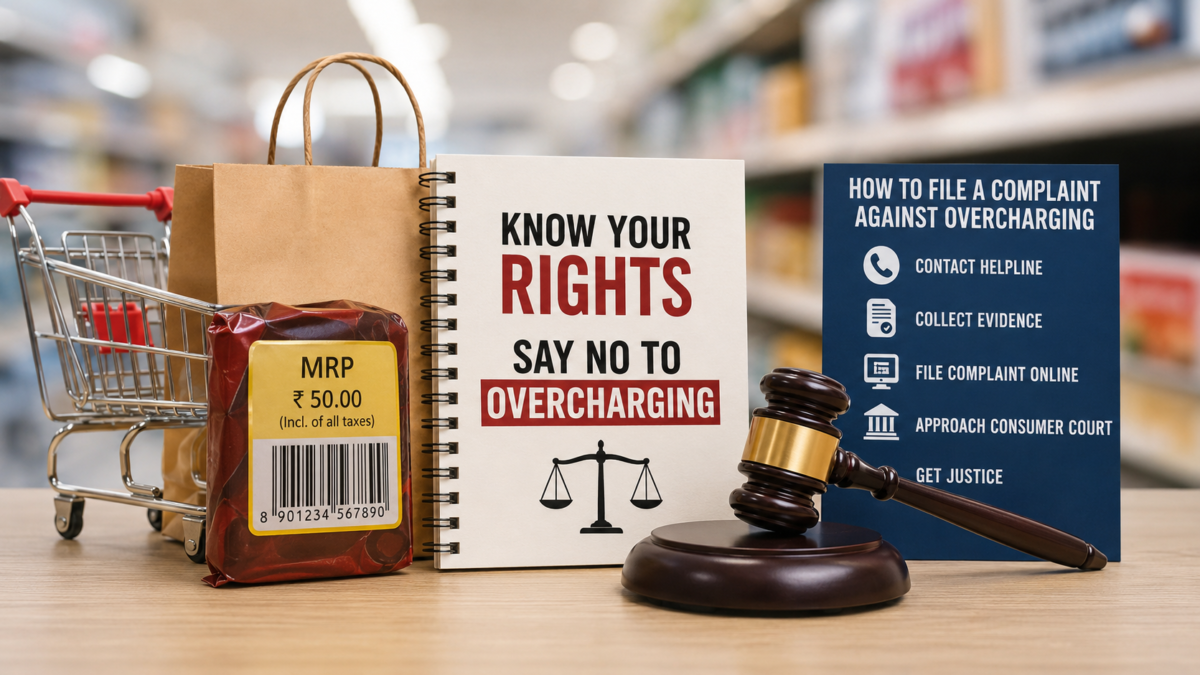
Charged above MRP? Learn how to file a complaint in India with this step-by-step guide. Know your rights, legal options, and how to get a refund easily. Being charged more than the Maximum Retail Price (MRP) is not just frustrating—it’s illegal. In India, consumer protection laws clearly state that no retailer can sell a packaged product above its printed Maximum Retail Price. Whether it’s a bottle of water at a shop, snacks at a cinema, or goods at a local store, overcharging violates your rights as a consumer.
If you’ve ever faced this issue, here’s a clear and practical guide to help you take action and file a complaint effectively.
What Is Overcharging on MRP?
MRP is the highest price a seller can legally charge for a product. While retailers can offer discounts and sell below Maximum Retail Price, they are strictly prohibited from charging anything above it.
Overcharging, even by a small amount, is considered an unfair trade practice under Indian law. It applies to all packaged goods, regardless of where they are sold.
Table of Contents
Step 1: Raise the Issue with the Seller
Start by addressing the problem directly with the shopkeeper or store manager. Politely point out the printed Maximum Retail Price and request a correction in the bill.
In many cases, overcharging may be due to billing errors or oversight. If the seller acknowledges the mistake and corrects it, the issue can be resolved instantly. However, if they refuse or argue, you should move forward with a formal complaint.
Step 2: Collect Proper Evidence
Documentation is key when filing any consumer complaint. Make sure you gather:
A copy of the bill or receipt
Clear photos of the product showing the MRP
Any communication with the seller
Optional video proof of the transaction
These pieces of evidence strengthen your case and make it easier for authorities to take action.
Step 3: Contact the National Consumer Helpline
The National Consumer Helpline (NCH) is one of the easiest ways to report overcharging. It acts as a bridge between consumers and companies, helping resolve disputes without going to court.
You can file a complaint through:
Toll-free numbers: 1915 or 1800-11-4000
Online complaint portal
Mobile apps or messaging services
Once your complaint is registered, it is forwarded to the concerned business or authority for resolution.
Step 4: Report to the Legal Metrology Department
Overcharging cases fall under the Legal Metrology Department, which regulates pricing and packaged goods.
You can file a complaint by:
Visiting the nearest Legal Metrology office
Submitting your complaint online (if available in your state)
Providing all supporting documents
Authorities may investigate the matter and impose penalties on the retailer if found guilty.
Step 5: File a Case via the E-Daakhil Portal
If your complaint is not resolved through initial channels, you can take legal action using the E-Daakhil portal. This platform allows you to file consumer cases online without physically visiting a court.
Steps include:
Registering on the portal
Uploading relevant documents
Submitting details of your complaint
This method is convenient, time-saving, and increasingly popular among consumers seeking justice.
Step 6: Approach Consumer Court
If the issue still remains unresolved, you can approach consumer courts based on your claim amount:
District Commission for lower-value claims
State Commission for moderate claims
National Commission for higher-value disputes
Read Also – What Is The Full Form Of BMW? Meaning, History And Facts
Consumer courts have the authority to order refunds, compensation, and penalties against businesses involved in unfair practices.
Useful Tips to Avoid Overcharging
Always check the MRP before making a purchase
Insist on a printed bill or receipt
Avoid buying from sellers who refuse billing
Stay alert in places where overcharging is common, such as tourist spots or entertainment venues
Being vigilant can help you avoid such situations altogether.
Why You Should Report Overcharging
Many people ignore overcharging because the extra amount seems insignificant. However, when this practice is repeated across hundreds or thousands of customers, it becomes a major issue.
By reporting such incidents, you not only protect your own rights but also help create a fair and transparent marketplace for everyone.
Conclusion
Overcharging on Maximum Retail Price is a clear violation of consumer rights in India, and there are well-defined steps to address it. From raising the issue with the seller to filing complaints through official channels and consumer courts, the system is designed to support you.
The next time you notice you’ve been charged more than the Maximum Retail Price, don’t ignore it. Take action, follow the proper process, and contribute to a more accountable retail environment.





[…] Read Also – How To File A Complaint Against Overcharging On MRP In India […]