

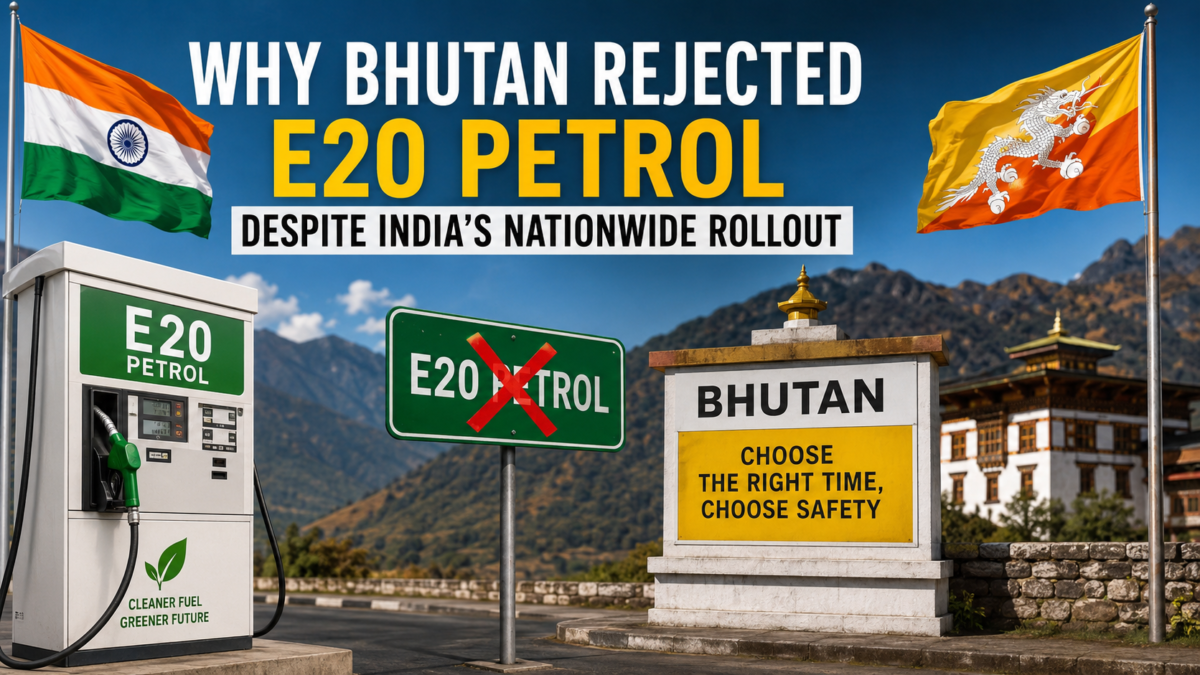
Discover why Bhutan Rejected India’s E20 Petrol despite the nationwide rollout. Learn about the infrastructure challenges, ethanol storage concerns, and what it means for the future of clean fuel adoption. India has made significant progress in promoting cleaner transportation fuels by introducing E20 across the country. The initiative is designed to reduce dependence on imported crude oil, lower vehicle emissions, and encourage the use of renewable biofuels. While the rollout marks a major milestone for India’s energy sector, neighboring Bhutan has decided not to adopt E20 petrol at this stage.
Although Bhutan imports most of its fuel from India, it has requested the continued supply of conventional petrol instead of the new ethanol-blended fuel. The decision is based on technical and infrastructure considerations rather than opposition to environmentally friendly fuel.
Understanding E20 Petrol
E20 petrol is a blend consisting of 20% ethanol and 80% conventional petrol. Ethanol is a renewable fuel commonly produced from agricultural crops such as sugarcane and maize. By blending ethanol with petrol, countries can reduce fossil fuel consumption, lower carbon emissions, and support agricultural industries.
The widespread adoption of E20 is considered an important step toward improving energy security while promoting sustainable transportation.
Why Bhutan Has Delayed the Transition
Bhutan’s decision is primarily linked to the condition of its fuel storage and distribution infrastructure. Ethanol has unique chemical properties that require modern storage systems capable of preventing moisture contamination.
Many of Bhutan’s existing underground fuel storage tanks are older and located in mountainous regions where moisture infiltration is a greater concern. Since ethanol readily absorbs water, even small amounts of moisture can affect fuel quality during storage.
Table of Contents
Rather than introducing a fuel that could create operational challenges, Bhutan has chosen to continue using conventional petrol until the necessary infrastructure upgrades are completed.
The Challenge of Ethanol Storage
Unlike traditional petrol, ethanol is hygroscopic, meaning it naturally absorbs moisture from the surrounding environment. If excessive water enters ethanol-blended fuel, it can lead to phase separation, where the ethanol and water separate from the petrol.
This process reduces fuel quality and may affect engine performance. In severe cases, contaminated fuel can cause starting problems, corrosion, or damage to fuel system components.
For countries with older storage facilities or challenging environmental conditions, maintaining the quality of ethanol-blended fuel requires additional safeguards and modern equipment.
Infrastructure Is the Key to a Successful Transition
Bhutan’s cautious approach demonstrates that introducing cleaner fuels involves more than simply changing fuel composition. A successful transition also depends on reliable infrastructure, quality control systems, secure storage tanks, and efficient transportation networks.
Before adopting E20 petrol, Bhutan intends to strengthen its fuel distribution system to ensure the new fuel can be stored and delivered without compromising quality or vehicle performance.
This measured approach reflects a focus on long-term reliability rather than rapid implementation.
What It Means for India’s Green Fuel Mission
Bhutan’s decision does not impact India’s broader ethanol blending program. India continues expanding the availability of E20 petrol as part of its long-term strategy to reduce crude oil imports, improve energy independence, and lower greenhouse gas emissions.
The country’s investment in ethanol production also creates new opportunities for farmers by increasing demand for agricultural feedstocks used in biofuel manufacturing.
As the program expands, India is expected to continue refining fuel infrastructure, vehicle compatibility, and distribution systems to support higher ethanol blends.
Different Countries, Different Readiness Levels
The decision highlights an important reality of the global clean-energy transition. Every country operates under different geographic, economic, and infrastructure conditions. While some nations are ready to adopt advanced fuel technologies immediately, others require additional preparation before implementation becomes practical.
Bhutan’s choice reflects careful planning rather than resistance to renewable energy. By waiting until its infrastructure is fully prepared, the country aims to ensure a smooth and reliable transition when the time is right.
Read Also – How Donald Trump Made Billions From Crypto While Many
Looking Ahead
The move toward cleaner transportation fuels is expected to continue worldwide as governments seek sustainable alternatives to conventional fossil fuels. However, long-term success depends on balancing environmental goals with technical readiness.
Modern storage facilities, improved fuel handling systems, and strong quality control measures are essential for ensuring ethanol-blended fuels perform safely and efficiently.
Bhutan’s decision serves as an example of how infrastructure readiness can influence energy policy. As upgrades are completed in the future, the country may be well-positioned to adopt cleaner fuels without compromising fuel quality or operational reliability.
Conclusion
Bhutan’s decision to postpone the adoption of petrol highlights the importance of preparing infrastructure before implementing new fuel technologies. While India continues advancing its clean energy objectives through ethanol blending, Bhutan has chosen a gradual approach that prioritizes fuel quality, safety, and system reliability.
The situation demonstrates that a successful transition to sustainable energy requires more than ambitious policies. Strong infrastructure, modern storage facilities, and effective fuel management are equally essential to ensuring cleaner fuels deliver their intended environmental and economic benefits.