

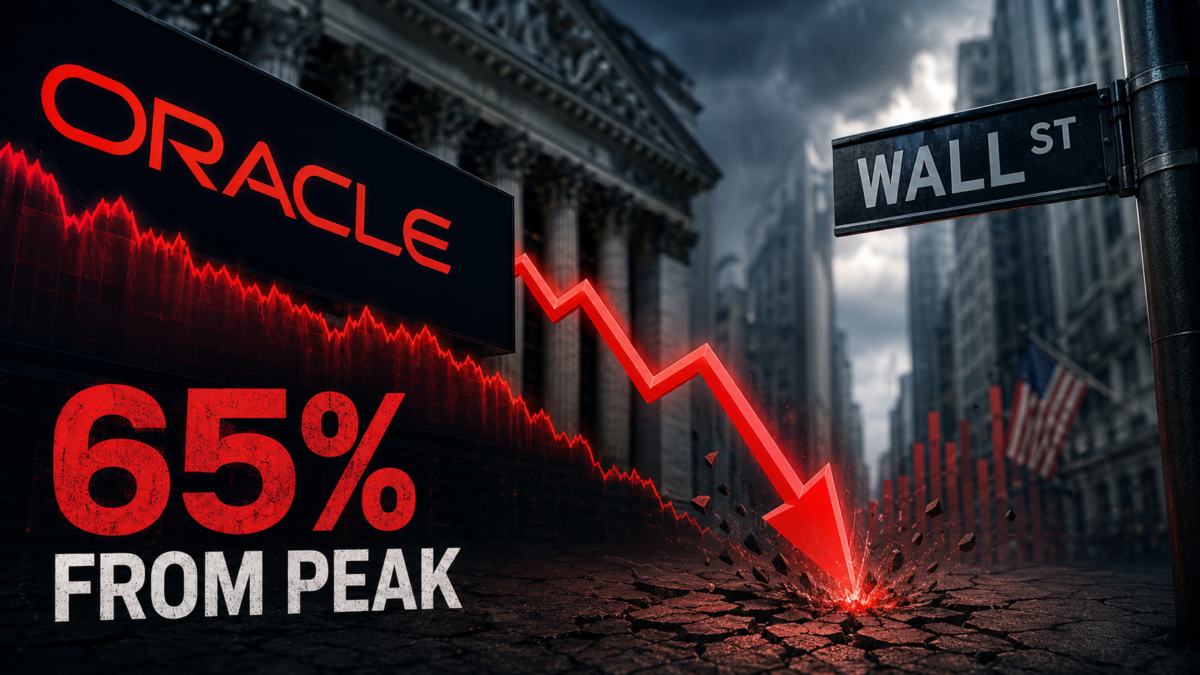
Oracle shares have fallen nearly 65% from their peak despite strong cloud growth. Discover the key reasons behind the stock’s decline, AI spending concerns, and what investors should watch next. Oracle was once one of Wall Street’s biggest success stories during the artificial intelligence (AI) investment boom. Investors poured money into the company, believing its cloud infrastructure business would become one of the largest beneficiaries of the AI revolution. However, market sentiment has changed dramatically. Oracle’s stock has fallen nearly 65% from its record high, leaving investors questioning what went wrong.
The sharp correction does not necessarily indicate that Oracle’s business is failing. Instead, it reflects growing concerns over the company’s aggressive AI investments, rising debt, and the market’s demand for stronger financial returns.
Why Oracle Became an AI Market Favorite
Over the past few years, Oracle successfully positioned itself as a major cloud infrastructure provider. As companies raced to build AI models, demand for high-performance cloud computing, massive data centers, and advanced computing power surged.
Oracle benefited from this trend by securing major cloud contracts and investing billions in expanding its infrastructure. Investors expected the company to challenge larger cloud providers and generate years of rapid revenue growth.
Table of Contents
This optimism helped push Oracle shares to record levels as AI became the dominant investment theme across global technology markets.
What Caused Oracle Shares to Fall?
Although Oracle continues to report strong cloud demand, several concerns have emerged that changed investor sentiment.
- Massive AI Infrastructure Spending
Oracle has committed enormous amounts of capital to expand its AI infrastructure. Building new data centers and purchasing advanced computing hardware requires billions of dollars before meaningful profits are generated.
While these investments may support long-term growth, investors have become increasingly cautious about how long it will take to recover these costs.
- Rising Debt Levels
Funding large-scale AI expansion has significantly increased Oracle’s borrowing requirements.
Credit rating agencies and market analysts have expressed concern that rising debt could pressure future profitability if expected AI revenues fail to materialize quickly. This has made many institutional investors more cautious about holding the stock.
- Investors Want Results, Not Promises
The technology sector has experienced enormous enthusiasm around AI, but markets are becoming more selective.
Investors now expect companies to convert AI-related investments into consistent earnings and cash flow rather than simply announcing ambitious expansion plans. Oracle’s impressive order backlog has yet to fully translate into sustainable profits, contributing to the decline in investor confidence.
Strong Business Performance Isn’t Enough
Interestingly, Oracle’s operational performance has remained relatively healthy.
Its cloud infrastructure business continues to grow rapidly, and customer demand remains strong. The company also maintains a significant pipeline of future contracts.
However, financial markets often price future expectations rather than current performance. Since Oracle’s valuation had already reflected extremely optimistic AI growth assumptions, any increase in execution risk triggered a substantial correction in the share price.
AI Stocks Face Higher Expectations
Oracle’s decline highlights a broader trend across AI-related companies.
During the initial AI boom, investors rewarded businesses simply for participating in artificial intelligence. Today, the market is becoming far more disciplined. Companies are expected to demonstrate:
Sustainable revenue growth
Strong free cash flow
Responsible capital spending
Manageable debt levels
Consistent profitability
Businesses unable to satisfy these expectations may experience significant share-price volatility despite reporting solid operational results.
Could Oracle Recover?
Many analysts still believe Oracle has meaningful long-term potential due to its expanding cloud infrastructure, enterprise software business, and growing role in AI computing.
Read Also – Vedanta Power Q1 Sales Surge 38% YoY To 5,225 Million Units
If the company successfully converts its large contract backlog into profitable revenue while controlling debt and capital expenditure, investor confidence could gradually improve.
However, the recovery may depend less on AI announcements and more on measurable financial performance over the coming quarters.
Key Takeaways for Investors
Oracle’s nearly 65% decline serves as a reminder that even high-quality technology companies are not immune to changing market sentiment.
The company’s cloud business remains strong, but investors are increasingly focused on execution, profitability, and financial discipline rather than future growth projections alone.
For long-term investors, Oracle remains an important company to watch. Its success will largely depend on whether massive AI investments generate sustainable returns while maintaining a healthy balance sheet.
As the AI industry continues to mature, companies that combine innovation with disciplined financial management are likely to emerge as the biggest winners. Oracle still has that opportunity—but the market now expects proof rather than promises.