

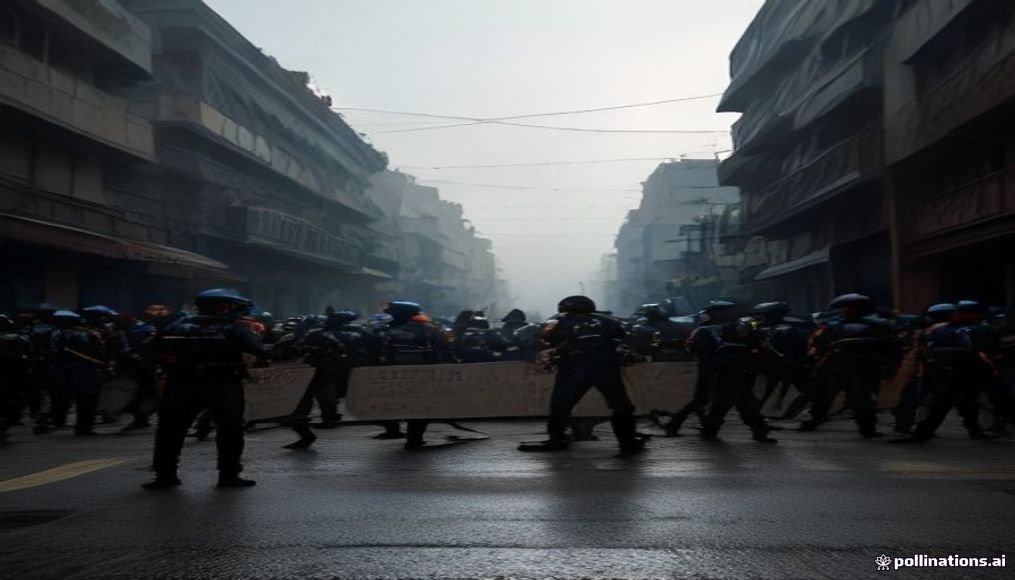
Tensions remain exceptionally high across the national capital as the Gyanesh Kumar protest prepares to resume following a chaotic first phase of demonstrations. Activists, opposition figures, and ordinary citizens have gathered once again to voice their intense grievances regarding ongoing administrative and electoral controversies. The latest wave of the Gyanesh Kumar protest highlights mounting friction between civic groups and state machinery, especially as law enforcement agencies tighten security measures across key urban corridors. Observers note that this mobilization has transformed into a major talking point across India, drawing attention to how authorities handle large-scale dissent.
As the fresh demonstrations unfold, the core grievances driving the Gyanesh Kumar protest center on accountability, transparency, and recent administrative decisions that have sparked widespread national debate. Demonstrators argue that their constitutional right to peaceful assembly is being systematically curtailed through barricades, Section 144 restrictions, and swift preventive detentions. On the other side, officials maintain that strict crowd control protocols are essential to prevent public disruption and maintain law and order in sensitive zones like central Delhi and surrounding areas. This balancing act between democratic expression and public safety defines the ongoing narrative surrounding the Gyanesh Kumar protest.
Heavy Detentions And Security Lockdown
In the earlier phases of the Gyanesh Kumar protest, law enforcement agencies detained hundreds of participants, including notable political figures from parties like the RJD and AAP, alongside prominent civil society activists. Buses filled with detained protesters were moved away from focal points to diffuse potential escalations. The heavy police deployment created massive traffic bottlenecks, leaving commuters stranded and disrupting daily routines across various localities. Security forces have deployed additional personnel, riot gear, and multi-layered barricading to prevent demonstrators from marching toward restricted zones, particularly near crucial bureaucratic landmarks.
Key Developments In The Capital
The ground reality surrounding the Gyanesh Kumar protest involves several critical elements that continue to unfold by the hour:
- Intense police barricading deployed around key administrative zones to block marchers.
- High-profile detentions of opposition lawmakers and prominent civil rights activists.
- Widespread traffic diversions causing severe gridlock across central and northern Delhi.
- Spillover reactions and solidarity demonstrations reported in other major urban hubs like Mumbai.
These developments show that the Gyanesh Kumar protest is no longer just a localized gathering but a broader flashpoint for political opposition and grassroots mobilization. The involvement of sitting MPs and party leaders has amplified the national political stakes, turning administrative grievances into high-voltage legislative confrontations.
Political Fallout And Future Outlook
The political repercussions of the Gyanesh Kumar protest are expected to reverberate through upcoming parliamentary sessions and state-level political campaigns. Opposition parties have unified in condemning the heavy-handed approach of the administration, framing the mass detentions as an assault on fundamental democratic freedoms. Meanwhile, ruling coalition supporters argue that agitation tactics are being weaponized for partisan political gains rather than genuine public interest. As the Gyanesh Kumar protest enters its next phase, all eyes remain fixed on Delhi’s streets to see whether authorities and organizers can find a peaceful resolution or if further clashes are inevitable.
The Broader Implications For Electoral Governance And Institutional Trust
Beyond the immediate spectacle of street-level clashes and heavy police barricades, the Gyanesh Kumar protest touches upon deeper structural questions regarding institutional trust and the mechanics of electoral governance in contemporary India. At the heart of the controversy is a growing public anxiety over how regulatory bodies communicate major policy shifts and administrative decisions. When citizens perceive a communication gap between high-ranking officials and the electorate, public frustration often manifests as mass mobilization. Analysts point out that democratic resilience relies heavily on transparent feedback loops between independent oversight institutions and the public.
Furthermore, the involvement of diverse civic coalitions in the Gyanesh Kumar protest illustrates a shifting paradigm in how grassroots movements leverage digital media and decentralized organization. Unlike traditional protests that relied solely on centralized union leadership, modern demonstrations use real-time messaging networks and social media live-streams to mobilize supporters, coordinate logistics, and document law enforcement actions instantaneously. This digital transparency cuts both ways: it empowers protesters to project their narrative globally, but it also provides security agencies with immediate intelligence to preemptively deploy crowd control measures. Understanding this technological dimension is crucial for grasping why conventional containment strategies often fail to fully quell modern political agitation.
Economic Ripples And Urban Logistical Challenges
The operational fallout of the Gyanesh Kumar protest extends well beyond the political arena, inflicting tangible economic disruptions on India’s commercial hub. Central Delhi and its surrounding business districts function as vital arteries for daily trade, corporate commuting, and supply chain logistics. Repeated security lockdowns, sudden metro station closures, and extensive traffic diversions force commercial establishments to alter their operating hours or suffer steep drops in foot traffic. Small vendors, transport operators, and retail businesses bear the brunt of these sudden closures, translating political friction into localized economic strain.
Local trade associations have increasingly voiced concerns over how recurring urban disruptions impact investor sentiment and the city’s daily economic productivity. While the right to peaceful protest remains a cornerstone of the constitutional framework, municipal authorities face mounting pressure to balance civic expression with the economic necessity of keeping urban centers functional. Economists and urban planners suggest that future administrative management will require more sophisticated conflict-resolution frameworks—such as designated protest zones outside core commercial sectors—to accommodate democratic dissent without paralyzing city infrastructure. Until such balanced protocols are successfully implemented and institutionalized, recurring friction points like the Gyanesh Kumar protest will continue to test the logistical and administrative capacity of the national capital.
For more stories like this, browse our Trending News coverage. For additional background, see this overview of how news coverage works.
