

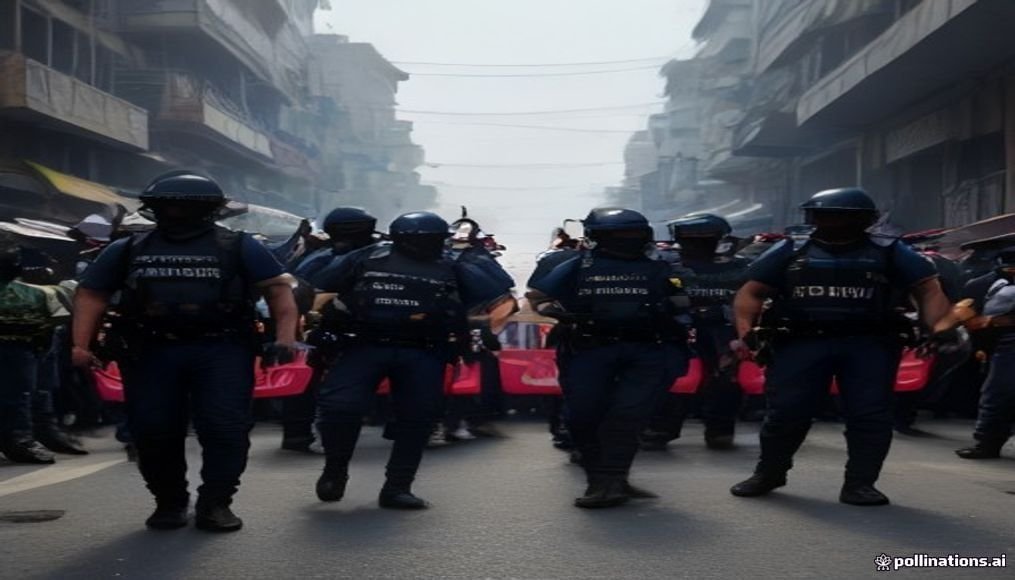
Political friction in the national capital reached a boiling point recently, leading to chaotic scenes and significant police action. When opposition MPs detained protocols were swiftly enacted by law enforcement during a high-profile march, it sent shockwaves through the country’s political landscape. This escalation highlights the deepening rift between major political forces and regulatory bodies, particularly regarding electoral transparency and administrative decisions. As the opposition MPs detained situation unfolded near key government locations, onlookers witnessed an intense standoff between security personnel and prominent leaders expressing fierce dissent.
The sequence of events began when legislators and party members attempted a coordinated march toward crucial administrative offices. Tensions escalated rapidly as security forces formed tight cordons to block the path of the procession. The decision to have opposition MPs detained came amid heated exchanges and dramatic moments caught on camera by multiple media outlets. Observers noted that the sheer scale of the protest and the subsequent police response underline a troubling atmosphere of mistrust between the ruling establishment and opposition parties.
The Core of the Dispute
At the heart of this confrontation lies a fundamental disagreement over institutional integrity and administrative transparency. The opposition MPs detained today argue that their democratic right to peaceful assembly and representation is being systematically suppressed. They have raised serious concerns regarding recent directives and protocol choices made by oversight bodies, claiming these decisions compromise fairness. The confrontation intensified when requests for specific high-level meetings within parliamentary complexes were denied, prompting leaders to take to the streets to voice their grievances directly.
Key grievances driving the opposition MPs detained crisis include:
- Allegations of partisan bias within key regulatory frameworks
- Refusal of administrative venues for political dialogue
- Restrictions on peaceful demonstrations near critical government zones
- Demands for greater transparency in electoral administration
These points form the bedrock of a unified front that various regional and national factions are attempting to build ahead of upcoming political milestones. By rallying together, these groups aim to amplify pressure on the administration to address their institutional concerns.
Political Fallout and Future Implications
The immediate fallout from the opposition MPs detained incident has triggered a fierce war of words across political circles. Supporters of the government defended the police action, emphasizing the necessity of maintaining public order and preventing unauthorized disruptions in high-security zones. On the other side of the aisle, party leaders condemned the heavy-handed tactics, vowing to escalate their resistance both inside and outside legislative chambers. This event is expected to cast a long shadow over upcoming parliamentary sessions, potentially leading to further legislative gridlock.
Furthermore, the public spectacle of opposition MPs detained has galvanized grassroots supporters across various states. Social media platforms are flooded with debates, videos, and statements from leaders on both sides, turning a localized confrontation into a national discourse. Analysts suggest that unless channels for meaningful dialogue are opened between the administration and the opposition, such clashes may become increasingly frequent as political stakes continue to rise.
Looking Ahead
As the dust settles on the recent protests, the focus shifts to how the administration will respond to the persistent demands raised by the collective front. The opposition MPs detained episode serves as a stark reminder of the fragile state of political dialogue in the country today. Citizens and political analysts alike will be watching closely to see whether this high-drama showdown leads to genuine institutional reform or merely deepens the existing polarization within the nation’s political fabric.
The Broader Democratic Context
Beyond the immediate spectacle of the street-level clashes, this incident highlights a growing global anxiety regarding the health of democratic norms and institutional checks and balances. Political scientists point out that when channels for legislative debate narrow, opposition parties increasingly resort to public demonstrations as a last-ditch effort to capture public attention. This dynamic not only strains the relationship between the executive branch and minority lawmakers, but it also places civil servants and law enforcement agencies in the uncomfortable position of managing politically charged crowds without appearing partisan. The reliance on police cordons and preventive detentions instead of mediated negotiations signals a deterioration in the traditional art of legislative compromise.
Moreover, the modern media ecosystem plays a crucial amplifying role in these standoffs. Every push, chant, and raised fist is instantly broadcasted to millions of voters, hardening partisan identities and making bipartisan consensus even harder to achieve. When citizens watch their elected representatives being detained on live television, it evokes visceral reactions that bypass nuanced policy debates, driving a deeper wedge into the electorate. The challenge facing modern democracies is finding a way to balance the imperative of public security and order with the absolute necessity of robust, unimpeded political opposition.
Economic and Market Repercussions
While the political drama unfolds on the streets and television screens, financial markets and business communities are closely monitoring the stability of the capital. Persistent political instability and the threat of prolonged legislative gridlock can severely impact investor confidence. Major infrastructure bills, regulatory reforms, and economic policies often stall when the governing coalition and the opposition are locked in bitter, irreconcilable warfare. Investors typically favor predictability and strong governance; when the political climate turns volatile, foreign and domestic capital can become hesitant, fearing sudden policy shifts or administrative paralysis.
Key economic implications of prolonged political friction include:
- Delays in passing critical budgetary measures and economic stimulus packages
- Increased market volatility driven by uncertainty over future regulatory landscapes
- Hesitation among foreign investors regarding long-term capital commitments
- Diversion of administrative resources toward crowd management rather than economic development
Ultimately, the health of a nation’s economy is inextricably linked to the stability of its political institutions. As corporate leaders and financial analysts assess the fallout from the recent detentions, the consensus is clear: restoring a functional dialogue between the ruling administration and opposition forces is not just a matter of democratic principle, but an urgent economic necessity for the country’s continued growth and prosperity.
For more stories like this, browse our Trending News coverage. For additional background, see this overview of how news coverage works.
