

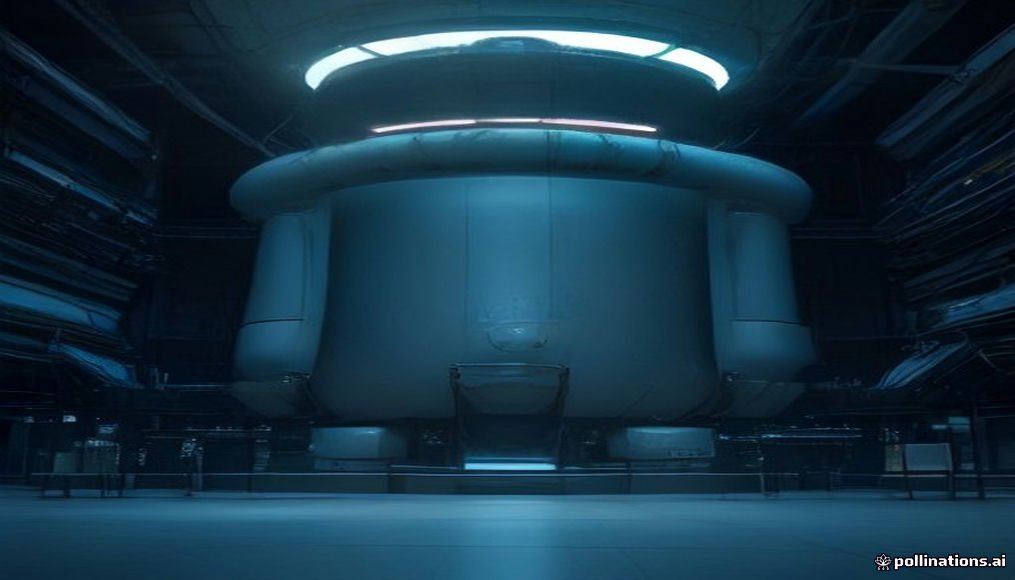
When we look up at the night sky, most of us think of distant stars, silver rockets, and floating astronauts. Behind the scenes, however, engineers are tackling a much more grounded problem: how to keep equipment running once it gets out there. Exploring the solar system requires immense amounts of energy, and traditional solar panels simply cannot cut it during long lunar nights or deep-space missions. This exact challenge is why assessing space reactor capabilities has become a major priority for modern space agencies.
Canada has officially stepped up its efforts to evaluate national space reactor capabilities, examining how nuclear fission systems might support future interplanetary outposts. While solar energy works well in near-Earth orbit, missions heading to the Moon or Mars face extended periods of darkness and extreme cold. A reliable nuclear power source changes everything, offering continuous electricity generation regardless of weather, dust storms, or orbital shadows. This strategic assessment looks closely at what domestic industries can build, test, and deploy in the coming decades.
Why Canada Needs Advanced Nuclear Power in Orbit
As international interest in establishing permanent lunar habitats grows, energy security becomes paramount. Relying solely on battery storage or solar arrays limits where astronauts can land and how long they can stay. By focusing on space reactor capabilities, policymakers hope to position local aerospace and nuclear sectors at the forefront of extraterrestrial infrastructure. The technological hurdles are immense, demanding compact designs that can withstand violent rocket vibrations while remaining lightweight enough to launch affordably.
Furthermore, deep-space communication networks and heavy-duty science equipment require steady wattages that standard photovoltaic cells struggle to provide over long durations. A compact fission generator can produce kilowatts or even megawatts of reliable power. This makes it an indispensable asset for running life-support systems, water recycling units, and scientific laboratories on distant celestial bodies. Canada possesses a rich history of nuclear innovation through CANDU technology, giving local scientists a unique foundation to tackle these extreme engineering constraints.
Key Advantages of Fission Systems
- Uninterrupted power supply independent of sunlight
- High energy density compared to traditional solar cells
- Ability to support energy-intensive life support and ISRU equipment
- Scalable designs suitable for both lunar rovers and large base camps
Challenges Facing Next-Generation Space Tech
Developing viable space reactor capabilities involves navigating complex regulatory, financial, and logistical roadblocks. Transporting radioactive material through Earth’s atmosphere demands rigorous safety protocols to guarantee containment under catastrophic failure scenarios. Engineers must also design automated deployment mechanisms, allowing the reactor to set itself up safely on the lunar surface without requiring extensive manual labor from astronauts.
Thermal management in the vacuum of space presents another enormous hurdle. On Earth, liquid cooling systems often rely on ambient air or large bodies of water to dissipate excess heat. In space, radiators must radiate thermal energy out into the void, which requires innovative materials and geometry. Canadian researchers are currently testing advanced alloy compositions and heat-pipe mechanisms to ensure these generators can operate safely for years without maintenance.
Global Implications and Future Outlook
The global race to utilize space reactor capabilities is accelerating rapidly, with several nations drafting blueprints for lunar nuclear power plants by the 2030s. Canada’s current assessment serves as a crucial first step toward international collaboration and eventual joint missions. By mapping out domestic manufacturing strengths, the country can secure partnerships with space agencies like NASA and the ESA, ensuring its technology travels aboard humanity’s next big leaps into the cosmos.
Ultimately, transitioning from theoretical models to hardware testing marks a thrilling chapter for modern technology. As funding flows into specialized research facilities, we move closer to a reality where sustained human presence on other worlds becomes achievable. The ongoing evaluation of space reactor capabilities proves that the next giant leap for mankind will be powered by the controlled splitting of the atom.
The Intersection of Terrestrial Nuclear Expertise and Aerospace Innovation
The push to develop reliable space reactors highlights a fascinating synergy between two traditionally distinct fields: terrestrial nuclear engineering and modern aerospace manufacturing. While building a reactor for a remote forest in northern Canada requires robust safety and longevity, adapting that same physics package for the vacuum of space demands entirely new paradigms of miniaturization and materials science. Domestic nuclear firms are now collaborating directly with aerospace startups to rethink everything from fuel pellet composition to electromagnetic containment systems.
This cross-pollination is already yielding unexpected spin-off technologies that benefit industries back on Earth. For instance, the ultra-efficient heat pipes and advanced thermal insulation developed for space-bound fission generators are finding applications in high-temperature industrial manufacturing and deep-underground geothermal energy recovery. By tackling the extreme constraints of the lunar environment, engineers are inadvertently solving efficiency bottlenecks that have plagued terrestrial energy grids for decades, proving that space exploration serves as a vital incubator for planetary sustainability.
Resource Utilization and the Path to Economic Independence
Establishing a permanent base on the Moon or Mars goes far beyond scientific curiosity; it requires establishing a self-sustaining economy driven by In-Situ Resource Utilization (ISRU). Extracting water ice from permanently shadowed lunar craters, processing regolith into building materials, and synthesizing rocket fuel for return journeys are profoundly energy-intensive processes. Solar panels alone cannot deliver the continuous, high-wattage output required to run heavy industrial mining equipment through a two-week-long lunar night.
Advanced space reactors provide the industrial muscle needed to turn raw extraterrestrial dust into usable infrastructure. With a reliable fission generator humming in the background, outposts can run automated refineries and 3D printers around the clock. This capability drastically reduces the tonnage of supplies that must be launched from Earth, lowering mission costs and opening the door to commercial space colonization. As national assessments continue to map out manufacturing pipelines, it is increasingly clear that nuclear fission is the ultimate anchor tenant for humanity’s industrial expansion into the solar system.
For more stories like this, browse our Technology coverage. For additional background, see this overview of the broader technology landscape.
