

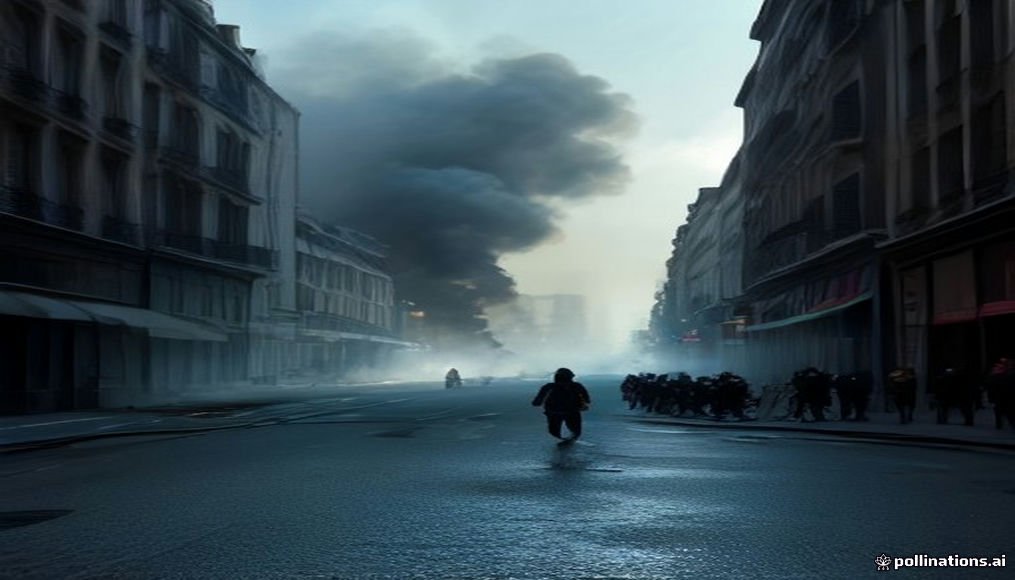
Recent events across major European urban centers have placed the administration under immense pressure, as intense France protests escalate into widespread chaos and property destruction. What began as student-led demonstrations quickly transformed into chaotic scenes on the streets of Paris and other cities, leaving authorities scrambling to maintain public order. These mounting France protests have not only disrupted daily life but have also ignited a fierce political debate regarding civil disobedience, law enforcement response, and the broader social stability of the nation. As the situation deteriorates, government officials face mounting criticism from various political factions over their handling of the unrest.
The unfolding crisis took a severe turn when large crowds engaged in looting high-end retail establishments and setting fires to historic municipal structures. Eyewitness accounts and video footage circulating widely online captured the shocking extent of the violence during the ongoing France protests. Firefighters battled blazes across multiple neighborhoods, while police deployed tear gas to disperse aggressive groups. Analysts note that these France protests reflect deep-seated economic frustrations and growing discontent among younger demographics, who feel increasingly alienated by current policy directions. The friction between demonstrators and security forces has created a tense atmosphere that echoes historical periods of civil unrest in the country.
Macron Vows Accountability Amid Escalating Unrest
In response to the deteriorating situation, President Emmanuel Macron issued a stern warning, vowing to hold strictly accountable all individuals who sought to undermine the state during the France protests. Speaking to emergency responders and security chiefs, the leadership emphasized that lawlessness and vandalism under the guise of public demonstration will face zero tolerance. The official stance regarding the France protests is heavily focused on restoring immediate calm and protecting public infrastructure from further damage. Authorities are utilizing extensive surveillance footage to identify key instigators involved in the destruction of property and attacks on law enforcement personnel.
Political observers point out that the government’s hardline approach on these France protests is a calculated move to project strength. However, critics argue that aggressive policing tactics might inadvertently fuel more anger among the populace. The delicate balance between safeguarding democratic rights to assemble and maintaining national security remains a central challenge for the current administration. As the fallout from the France protests continues to dominate headlines, policymakers are under pressure to address the underlying grievances that drove thousands of citizens into the streets.
Key Factors Fueling the Unrest
Understanding why the recent France protests gained such massive momentum requires looking closely at the socioeconomic landscape. Several compounding issues have contributed to the widespread public frustration:
- Rising costs of living and inflation squeezing middle and lower-income households.
- Widespread student dissatisfaction regarding higher education reforms and future job prospects.
- Perceived disconnect between urban youth and traditional political institutions.
- Growing skepticism over state economic policies and labor market flexibility.
These grievances transformed a localized student movement into a broader national crisis, amplifying the intensity of the France protests across multiple sectors. Labor unions and civil rights groups have also weighed in, calling for constructive dialogue while condemning acts of violence and looting.
Broader Implications for European Stability
The shockwaves from the ongoing France protests extend far beyond domestic borders, drawing concern from international allies and economic partners. As one of the core economic engines of the European Union, internal stability in Paris is vital for broader continental governance. Neighboring nations are closely watching how the French leadership manages the crisis, especially as populist movements capitalize on the chaos to question current governance models. The handling of these France protests will likely serve as a political bellwether for other Western democracies grappling with similar social tensions and post-pandemic economic fallout.
Ultimately, the path forward requires a multifaceted strategy that goes beyond immediate law enforcement measures. Restoring trust in public institutions after such violent France protests will demand transparent communication, policy adjustments, and genuine engagement with the grievances raised by the younger generation. Whether the administration can successfully navigate this tumultuous chapter without fracturing social cohesion remains one of the most critical questions facing contemporary European politics today.
Economic Ramifications and Market Confidence
Beyond the immediate physical damage to urban infrastructure, the persistent France protests have begun to exert a tangible toll on the nation’s economic vitality. Tourism, retail, and hospitality sectors—vital pillars of the French economy—have experienced sharp downturns as international travelers cancel bookings and local businesses are forced to board up their storefronts during peak operating hours. Financial markets have also shown signs of jitteriness, with foreign investors closely monitoring whether the prolonged civil unrest might stall critical fiscal reforms or lead to prolonged legislative gridlock. Economists warn that if consumer confidence continues to erode, the broader Eurozone could feel the secondary effects, particularly given France’s influential role in shaping regional fiscal policy and trade regulations.
Furthermore, the cost of deploying massive security details, repairing municipal property, and compensating insured business owners places an unexpected burden on public coffers at a time when the national budget is already tightly stretched. This fiscal squeeze limits the government’s ability to offer immediate financial relief or subsidies to the very populations driving the unrest, creating a difficult circular problem. Policymakers now find themselves walking a fiscal tightrope: attempting to appease a financially distressed citizenry without exacerbating national debt levels or triggering downgrades from major credit rating agencies.
The Digital Frontline: Social Media and the Acceleration of Chaos
A defining characteristic of these contemporary France protests is the unprecedented speed and reach with which information, misinformation, and mobilization occur via digital platforms. Unlike historical uprisings that relied heavily on traditional word-of-mouth or localized organizing, today’s demonstrators utilize encrypted messaging apps and short-form video algorithms to coordinate movements in real time, evade police cordons, and broadcast clashes globally within seconds. This digital ecosystem has transformed how dissent is organized, making it significantly more difficult for intelligence agencies and law enforcement to anticipate or preempt flashpoints of violence.
This dynamic has also sparked a contentious regulatory debate regarding digital governance and free expression. Government officials have privately and publicly pressured technology companies to curb the spread of inflammatory content that incites looting or direct assaults on security forces. However, civil liberties advocates fiercely push back against any measures that resemble censorship or digital blackouts, arguing that citizens retain a fundamental right to document police actions and share grievances online. Navigating this digital frontier represents a profound modern dilemma for a democratic state attempting to restore public order while preserving constitutional freedoms.
For more stories like this, browse our World Affairs coverage. For additional background, see this overview of international relations.
